Humanoid Robots at the National Museum of Emerging Science and Technology
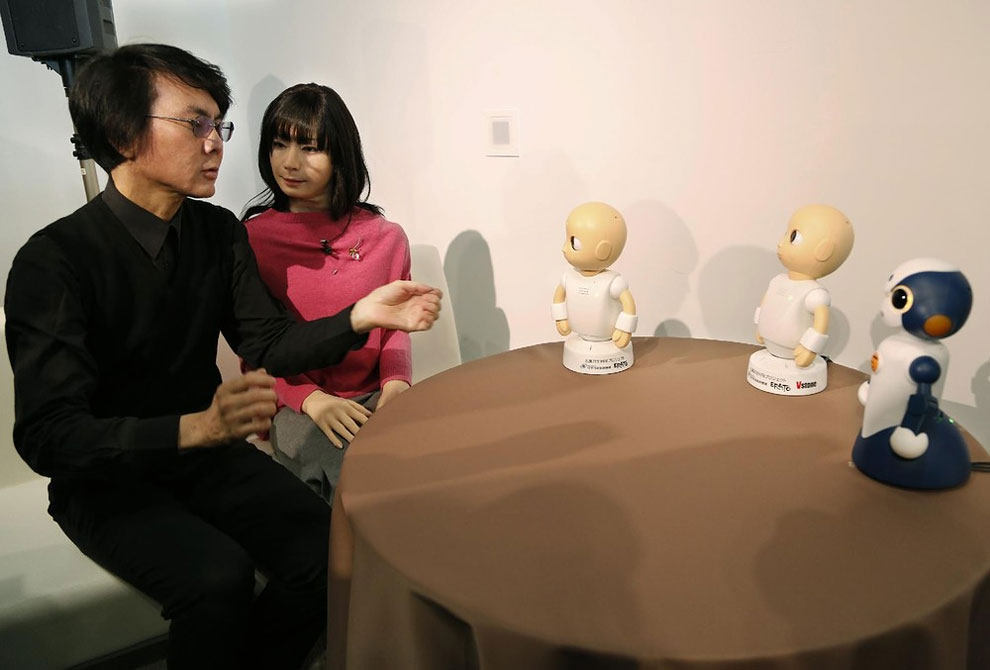
Japanese android expert Hiroshi Ishiguro, left, talks with new talking robot Sota, right, Android robot Otonaroid, second left, and another talking robots CommU, center and second right, during a press event at the National Museum of Emerging Science and Innovation Miraikan in Tokyo Tuesday, January 20, 2015. Ishiguro, the scientist behind the new talking robot in Japan says people should stop expecting robots to understand them, and instead try to chime in with robotic conversations. Ishiguro’s 28-centimer (11-inch) tall button-eyed Sota, which stands for “social talker”, is programmed to mainly talk with a fellow robot, and won’t be trying too hard to understand human speech – the major, and often frustrating, drawback of companion robots. (Photo by Shizuo Kambayashi/AP Photo)
Continue reading »
Museum Uses Brilliant Ads To Get You Excited About Science

Science people have all the brains, even when it comes to a spot of advertising. Wanting to engage the public with science —in a way that was both thought-provoking and fun—Vancouver’s Science World teamed up with creative agency Rethink Canada to produce these very clever ads. No need to double check these quirky facts, they’re all scientifically verified, promise. Continue reading »
Collider Exhibition at the Science Museum in London
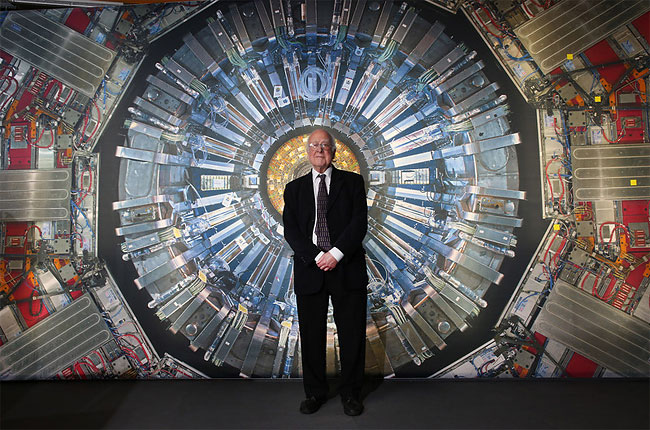
Professor Peter Higgs stands in front of a photograph of the Large Hadron Collider at the Science Museum’s ‘Collider’ exhibition on November 12, 2013 in London, England. (Photo by Peter Macdiarmid/Getty Images) Continue reading »
Art of Science 2011 Gallery
The Art of Science exhibition explores the interplay between science and art. These practices both involve the pursuit of those moments of discovery when what you perceive suddenly becomes more than the sum of its parts. Each piece in this exhibition is, in its own way, a record of such a moment.
This is the fifth Art of Science competition hosted by Princeton University. The 2011 competition drew 168 submissions from 20 departments. The exhibit includes work by undergraduates, faculty, research staff, graduate students, and alumni.
The 56 works chosen for the 2011 Art of Science exhibition represent this year’s theme of “intelligent design” which we interpret in the broadest sense. These extraordinary images are not art for art’s sake. Rather, they were produced during the course of scientific research. Entries were chosen for their aesthetic excellence as well as scientific or technical interest.
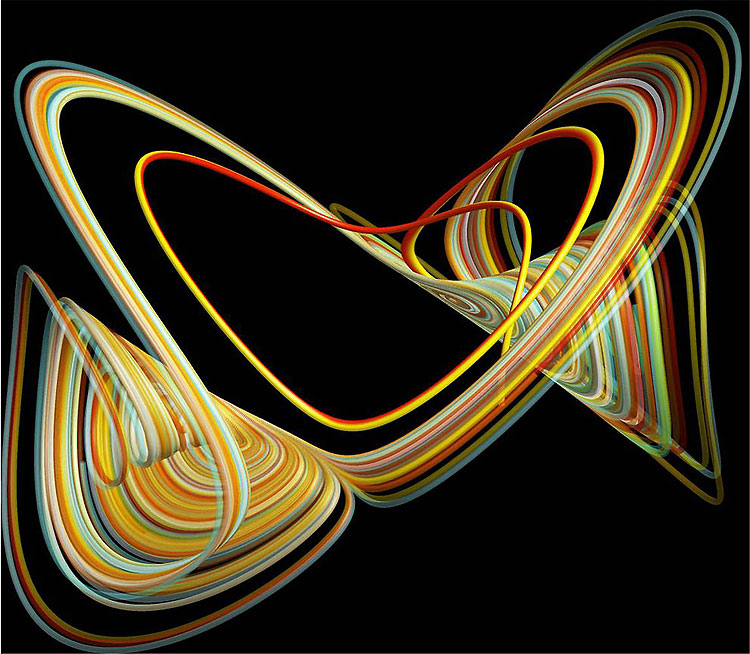
The magnetic field of the Earth has reversed its polarity several hundred times during the past 160 million years. Polarity reversals are known to be strongly irregular and chaotic, and the reversal durations are relatively short (typically a few thousand years) compared with the constant polarity intervals between reversals.
This image shows a simple deterministic model illustrating the geomagnetic reversals. The model is based on the non-linear interaction between two magnetic modes (dipole and quadrupole) and one velocity component of the Earth’s core flow, and the image shows typical trajectories in the 3D phase space. The corresponding strange attractor reproduces irregular reversals between two symmetrical states. (Christophe Gissinger / Dept. of Astrophysical Sciences/ Princeton Plasma Physics Laboratory) Continue reading »
Modernist Cuisine: The Art and Science of Cooking
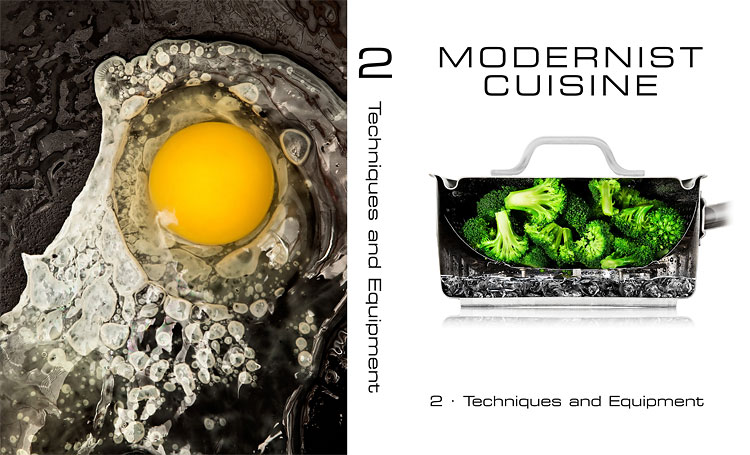
A revolution is underway in the art of cooking. Just as French Impressionists upended centuries of tradition, Modernist cuisine has in recent years blown through the boundaries of the culinary arts. Borrowing techniques from the laboratory, pioneering chefs at world-renowned restaurants such as elBulli, The Fat Duck, Alinea, and wd~50 have incorporated a deeper understanding of science and advances in cooking technology into their culinary art.
(Click photos to view in HD – depends on your screen resolution).
Visual Science
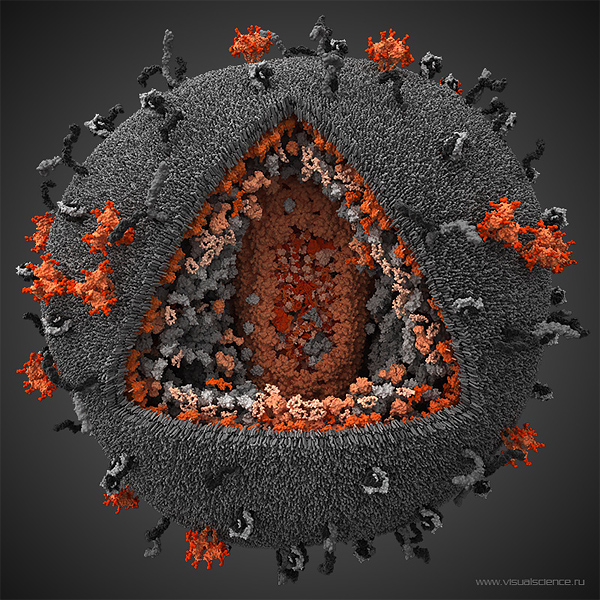
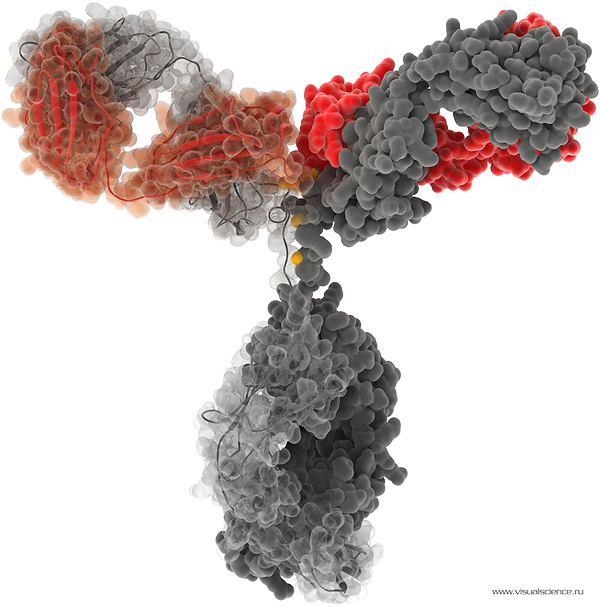
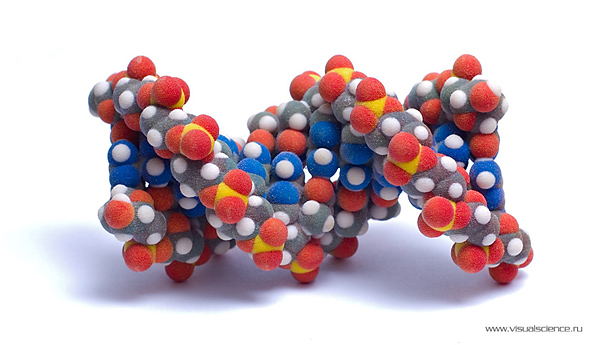
Very attractive molecular visualisations and infographic experiences from Visual Science, a professional design service company for medicine, pharmaceutics, nanotechnologies, biotechnology, biology and chemistry areas.