LIFE Magazine’s Sexiest Photos Of All Time

Actress Elizabeth Taylor posing in bathing suit on location during filming of motion picture The Night of the Iguana in Mexico. (Time / Getty Images) Continue reading »
Christmas in New York: Rare Photos from Turn of the Century
It was a time when William McKinely was finishing up his tenure as President of the United States and Theodore Roosevelt was starting his. It was a time when our families were stepping off the boats to start their life anew in a foreign city. A time before The Great War gripped the nation at its core.
These are rare photographs from the early 1900s depicting captured moments of Christmas in New York City; pictures of a long forgotten era.

Santa Claus and Salvation Army musicians entertaining children on N.Y.C. street (Library of Congress) Continue reading »
Photographer Denis Demkov

Inspiring photo works of Denis Demkov, a young photographer, lives in Rostov-on-Don, Russia. Continue reading »
In-Flight: Photography by Maria Netsounski

Absolutely amazing “in-flight” photos by Maria Netsounski from Holland. Continue reading »
Treasure-Laden Viking Cemetery Discovered in Poland
A mysterious burial ground dated to the late 10th and early 11th centuries A.D. has been discovered in a recent archaeological excavation in Poland. Located in the small village of Bodzia in central Poland, the site was excavated from 2007 through 2009 by archaeologists from the Institute of Archaeology and Ethnology of the Polish Academy of Sciences.
The discovery is the most recent in a series of excavations of funeral sites in Polish lands dated from the end of the 10th to the middle of the 11th century and connected to the presence of migrants, mostly from Scandinavia. Apart from the graves, the burial grounds contain rich grave goods comprising weapons, high-quality jewellery, ornaments, coins, amulets and many other finds.

Chamber grave E864 with the richly equipped burial of a young warrior. (S. Gronek) Continue reading »

Wildlife Photographer of the Year 2011

Tiny warm-up
Photographer: Cyril Ruoso
Folded up into a fur-ball, this youngster is warming its extremities in between bouts of play and feeding. He is part of a band of about 70 or so Qinling golden snub-nosed monkeys living high up in Chinas Qinling Mountains, surviving on lichen, leaves, bark and buds. If mother is not around to cuddle up to, then sitting like this is the best way to keep warm in the extreme winter cold, says Cyril. Sitting apart from its mother also makes such a little monkey vulnerable to attack by goshawks or golden eagles. The species is endangered, and this subspecies probably numbers no more than about 4000. The total population of all races of golden snub-nosed monkeys is only 8000-20,000. Continue reading »
Pop Photography of Robert Whitaker
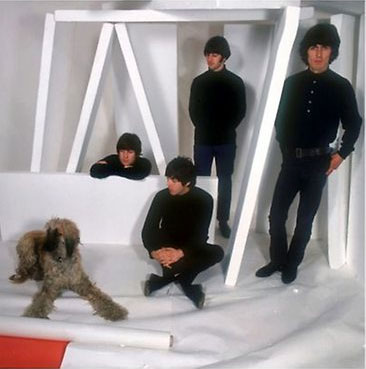
Robert Whitaker became involved with the Beatles after photographing their manager, Brian Epstein for the Jewish News in Melbourne. Continue reading »
‘Chicks With Guns’ by Lindsay McCrum
“Chicks with Guns, a gorgeous new book by Lindsay McCrum, is a lot more cerebral than it sounds. Fine art photographer McCrum shot dozens of portraits of women with their firearms, accompanied by personal statements from each woman.” — Houston Chronicle

Liz, San Jose, California, Beretta 96G Vertec .40-caliber pistol Continue reading »
The Ashaninka, A Threatened Way of Life
The Ashaninka are one of the largest indigenous groups in South America, their ancestral homelands ranging from Brazil to Peru. Since colonial times, their existence has been difficult — they have been enslaved, had their lands taken away or destroyed, and were caught up in the bloody internal conflict in Peru during the late 20th century. Today, a large communal reserve set aside for the Ashaninka is under threat by the proposed Pakitzapango dam, which would displace some 10,000 Ashaninka. (Jo Eede / The Atlantic)
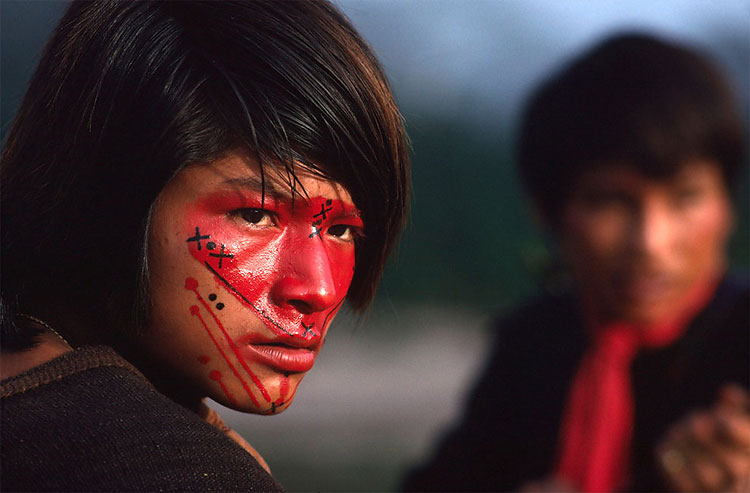
Acre Province, in the Amazon Rainforest, Brazil. Ashaninka Indians apply face-paint each day, in a design that reflects their mood. Made from the seeds of the Urucum plant, the paint has a rich, red color. Men take just as much care of their appearance as women. (Mike Goldwater) Continue reading »
Woodcarvers Create Christmas Masterpieces

Outside view of Toni Baur’s shop for woodcarved articles is seen on Dec.1, 2011 in Oberammergau, Germany. Oberammergau woodcarving tradition, which is the most famous in Bavaria, has its roots in the 12th century, though members of the St. Luke’s guild, the association of Oberammergau woodcarvers, deplore the decline of the tradition both from a lack of new generations of woodcarvers as well as competition from wood figurine factories in northern Italy and Asia. In Oberammergau approximately 50 woodcarvers still churn out figurines of mostly religious motifs throughout the year. (Johannes Simon,Getty Images) Continue reading »
Detroit Zoo Welcomes 3 Bear Cubs
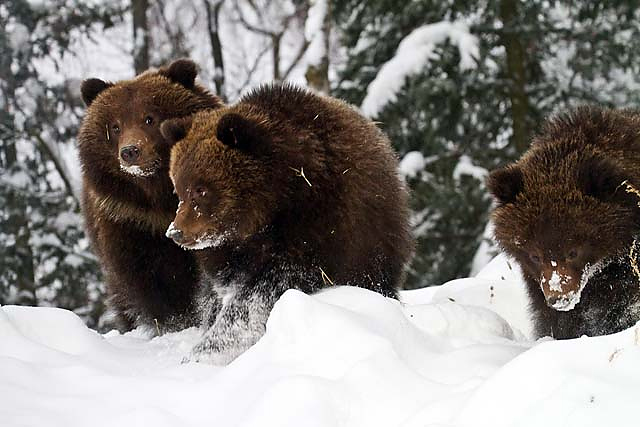
The three bears were orphaned in October after their mother was shot and killed following an encounter with a person in Alaska. The brothers were later seen in residential areas around Anchorage searching for food before being rescued by the Alaska Department of Fish and Game, which decided the cubs couldn’t survive an Alaskan winter without their mother. (John Gomes/Alaska Zoo) Continue reading »
It’s Ginkgo Time
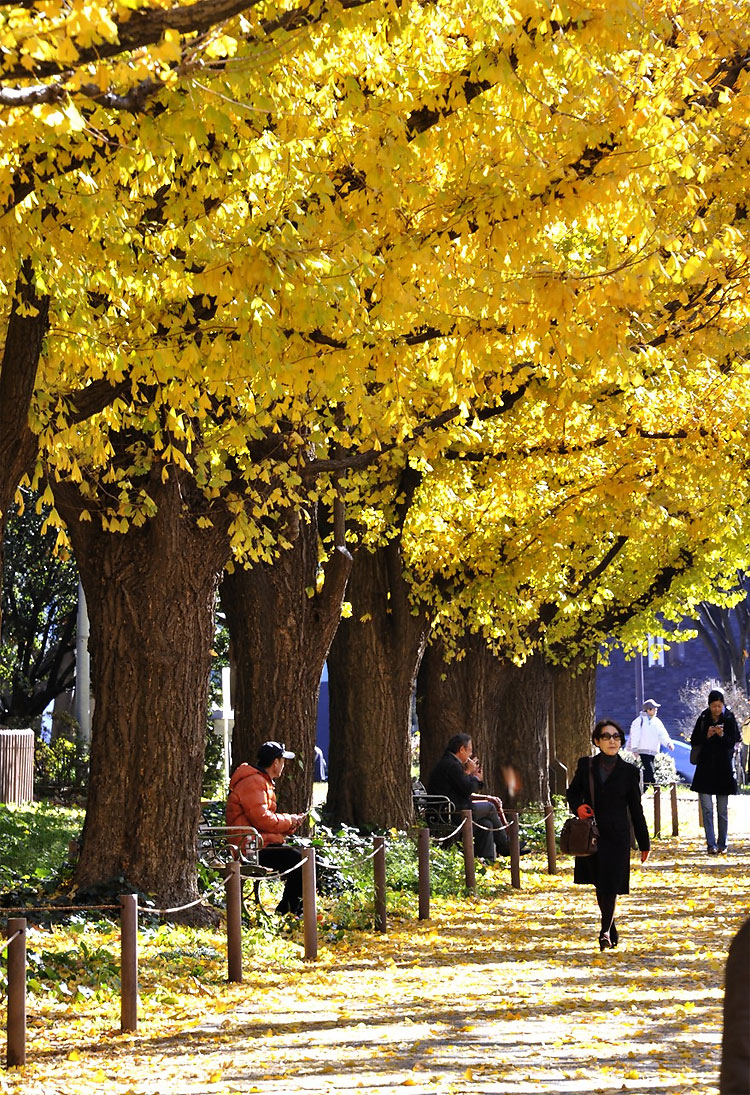
Pedestrians stroll under yellow ginkgo trees in Tokyo, Japan. Local residents came out to admire some 150 ginkgo trees displaying their yellow colors along the tree-lined street on a warm winter day. (AFP)
Photo of the Day: The Lights of Dubai

The Dubai Mall, the Address Dubai Mall hotel, and Dubai fountain are seen at night in Dubai, United Arab Emirates. Dubai and its state-owned non-financial companies have $101.5 billion of outstanding debt and may need further financial support to meet those obligations, Moody’s said. (Gabriela Maj/Bloomberg) Click image to zoom.
Backstage: Selena Gomez Promo Photo Shoots for Gomez Fragnance

Selena Gomez may not have her perfume out yet, but she has been working on the photo shoot for her print ads. And while it is not planned for release until next year, Selena is asking for help again to pick the final scent. As she puts it, she wants a fragrance name that sounds like something sweet and romantic, and that’s why they are holding a contest for a fan to fly out to NYC to help with the fragrance. Continue reading »
A Look into the Minds, or Rather, Desks, of Washington Art Notables
Photographer E. Brady Robinson photographs the desks of art notables in Washington. The assorted objects and clutter, or lack thereof, speak volumes about the desks’ owners.

Photographer E. Brady Robinson sits at one of the two desks in her apartment. Robinson decided to take pictures of desks while wandering around the offices of the Cultural Development Corporation, which hired her to take staff photos for an annual report. (Bill O’Leary / The Washington Post) Continue reading »
The Tattoo Erasers
Some who are inked have regrets. That’s where lasers come in. New technology is making the removal process easier, and more commonplace.

Ken Saler, a 61-year-old, semi-retired real estate maverick, has reinvented himself. His Advanced Laser Tattoo Removal office in the District has a steady stream of customers, all trying to dial back their everlasting tributes. Dozens of similar tattoo-removal businesses are opening across the country. (Matt McClain / FOR THE WASHINGTON POST) Continue reading »
Inside Amazon’s Very Hot Warehouse

Amazon.com did not create the notion of buying things online, but it has done more than any other retailer to move the experience into the mainstream. It has exceeded its customers’ expectations so often it must constantly struggle to top itself. “At first people were incredulous that the mouse on their computer was connected to their doorbell,” the Amazon executive Russell Grandinetti said recently. “Now they say: ‘It’s been 12 hours. Where’s my stuff?’ ”
All that stuff doesn’t magically fly to your house, even if the goal is to have it seem that way. Continue reading »
Pollution in China
Beijing authorities cancelled hundreds of flights and shut highways as thick smog descended on the Chinese capital on December 4 and 5, reducing visibility at one of the world’s busiest airports. Air quality in Beijing reached “hazardous” levels on December 5, according to the US embassy, which conducts its own measurements, while China’s state Xinhua news agency said pollution was likely to reach “dangerous” levels.
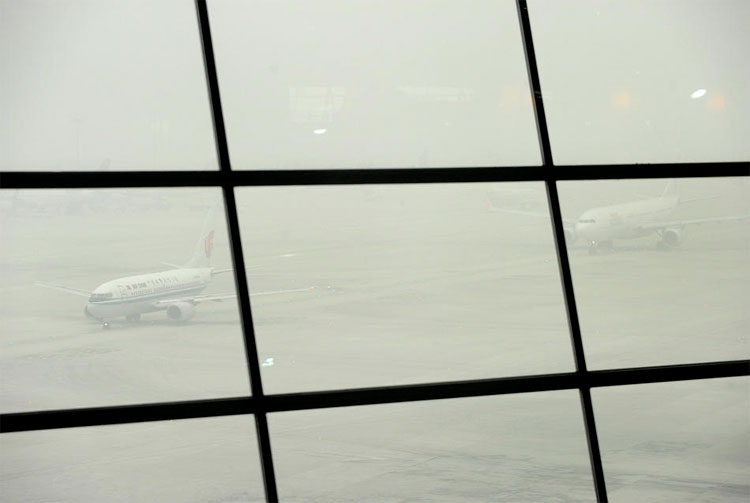
Airplanes queue to take off while shrouded in smog at Beijing International Airport on December 5, 2011. Beijing authorities cancelled hundreds of flights and shut highways as thick smog descended on the Chinese capital on December 4 and 5, reducing visibility at one of the world’s busiest airports. Air quality in Beijing reached “hazardous” levels on December 5, according to the US embassy, which conducts its own measurements, while China’s state Xinhua news agency said pollution was likely to reach “dangerous” levels. (LIU JIN/AFP/Getty Images) Continue reading »
tck tck tck Global Campaign for Climate Action
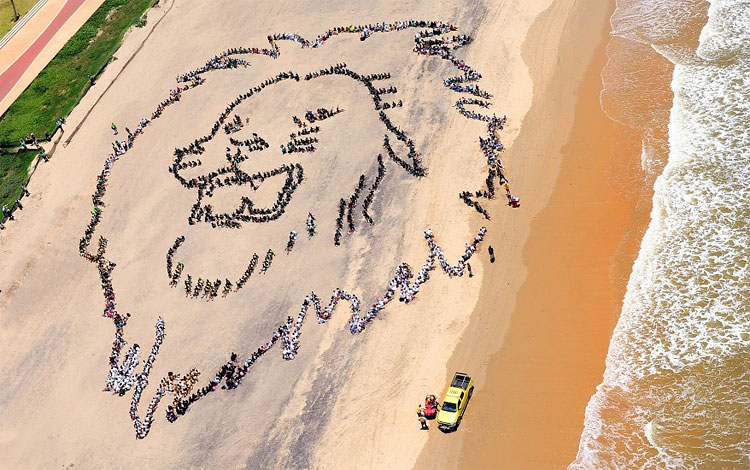
Thousands of South African youths form a giant lion head on a beach in Durban, to call for urgent action on climate change, on the sidelines of the U.N. Framework Convention on Climate Change. The event was in partnership with international artist John Quigley and supported by the “tck tck tck Global Campaign for Climate Action.” (AFP/ Greenpeace / Shayne Robinson)
Still in Steel
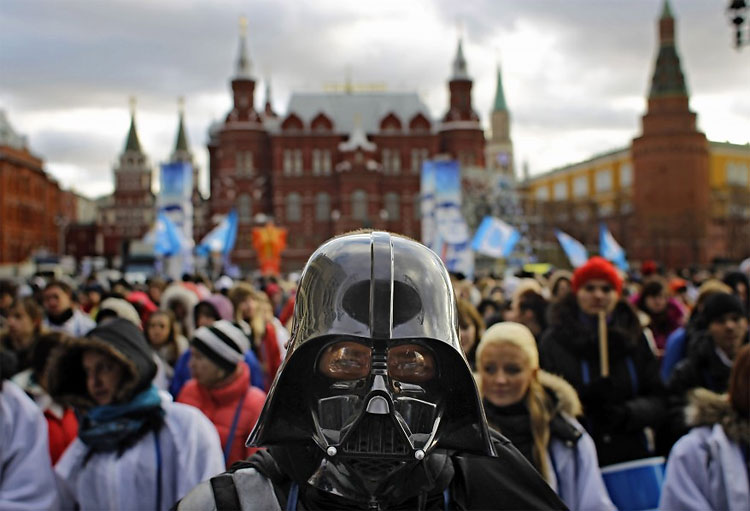
A member of the pro-Kremlin youth movement Stal wearing a Darth Vader mask participates in a rally in downtown Moscow. Prime Minister Vladimir Putin said Tuesday he’s satisfied with the performance of his party in Russia’s parliamentary election even though it lost a significant number of seats. (AP)
Cannafest 2011: International Hemp Fair in the Czech Republic
The biggest international hemp fair in the Czech Republic was held at the end of November. Cannafest introduces the best products from the field of hemp industry, starts with seeds, continues with growing technologies and ends with the final products as for example cosmetics, textiles or building materials.

Cannafest is the best way for companies from this field of interest to strengthen their positions on the Czech market, develop contacts for professionals and public but also for example to reach easier the “Eastern countries” as Poland, Slovakia, Ukraine and others as Cannafest is going to advertise totally in more then ten countries to attract as many professionals and visitors as possible. Continue reading »
From ‘Full Beards’ to ’99 Percent Beards’, Competition gets Hairy in New York

Judges Justin “Count Justidian,” left, and John Reardon, second left, inspect Kevin Cuomey’s moustache during the Second Annual Beard and Moustache Competition on Dec. 3, in Brooklyn, N.Y. Cuomey traveled from North Carolina to compete in the “Styled Mustache” category. (Claire Schneider / AP) Continue reading »
Madagascar’s Monster

An image from Japan’s ALOS satellite shows the estuary of the Betsiboka River, the largest river in Madagascar, flowing into Bombetoka Bay, which then opens into the Madagascar Channel. The picture was taken on Sept. 17, 2010, by the satellite’s Advanced Visible and Near Infrared Radiometer (AVNIR-2).
Art of Science 2011 Gallery
The Art of Science exhibition explores the interplay between science and art. These practices both involve the pursuit of those moments of discovery when what you perceive suddenly becomes more than the sum of its parts. Each piece in this exhibition is, in its own way, a record of such a moment.
This is the fifth Art of Science competition hosted by Princeton University. The 2011 competition drew 168 submissions from 20 departments. The exhibit includes work by undergraduates, faculty, research staff, graduate students, and alumni.
The 56 works chosen for the 2011 Art of Science exhibition represent this year’s theme of “intelligent design” which we interpret in the broadest sense. These extraordinary images are not art for art’s sake. Rather, they were produced during the course of scientific research. Entries were chosen for their aesthetic excellence as well as scientific or technical interest.

The magnetic field of the Earth has reversed its polarity several hundred times during the past 160 million years. Polarity reversals are known to be strongly irregular and chaotic, and the reversal durations are relatively short (typically a few thousand years) compared with the constant polarity intervals between reversals.
This image shows a simple deterministic model illustrating the geomagnetic reversals. The model is based on the non-linear interaction between two magnetic modes (dipole and quadrupole) and one velocity component of the Earth’s core flow, and the image shows typical trajectories in the 3D phase space. The corresponding strange attractor reproduces irregular reversals between two symmetrical states. (Christophe Gissinger / Dept. of Astrophysical Sciences/ Princeton Plasma Physics Laboratory) Continue reading »