Australian Native Wildlife: The National Geographic Photographer Creates A Photo Archive Of Biodiversity Around The World.
The National Geographic Photo Ark is a travelling exhibition of photographer Joel Sartore’s quest to create a photo archive of biodiversity around the world. So far, Sartore has captured studio portraits of more than 6,000 species – a number that he hopes to double.
On 1 July, the ark will open at Melbourne zoo – the first time it has been exhibited in the southern hemisphere. More than 50 portraits will be on display, including many of Australian endangered animals being protected by programs at the zoo itself. These captions have been edited from text supplied by Melbourne zoo.
Joel Sartore/National Geographic Photo Ark/The Guardian
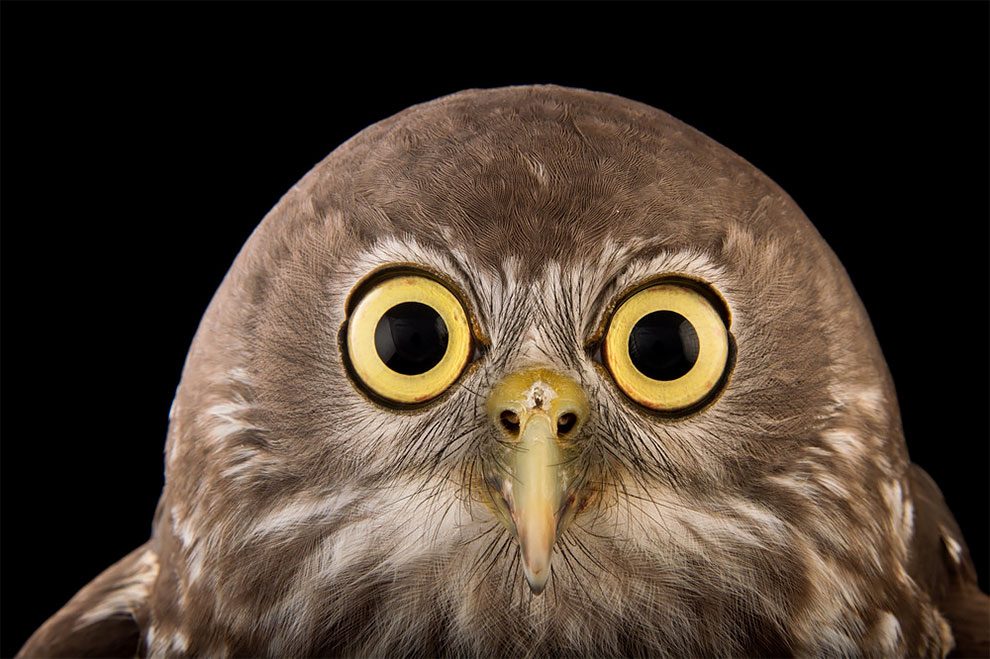
Barking owl. So-named because its call sounds like a barking dog, these birds are native to Australia, Indonesia and Papua New Guinea. In Victoria they are listed as an endangered species, and in 2003 there were estimated to be fewer than 50 breeding pairs.The main threat to the species in Victoria is loss of habitat, especially large trees with hollows in which they can nest and on which many of their prey depend. Apart from a bark, they may utter a chilling scream when they feel threatened.
Joel Sartore/National Geographic Photo Ark/The Guardian
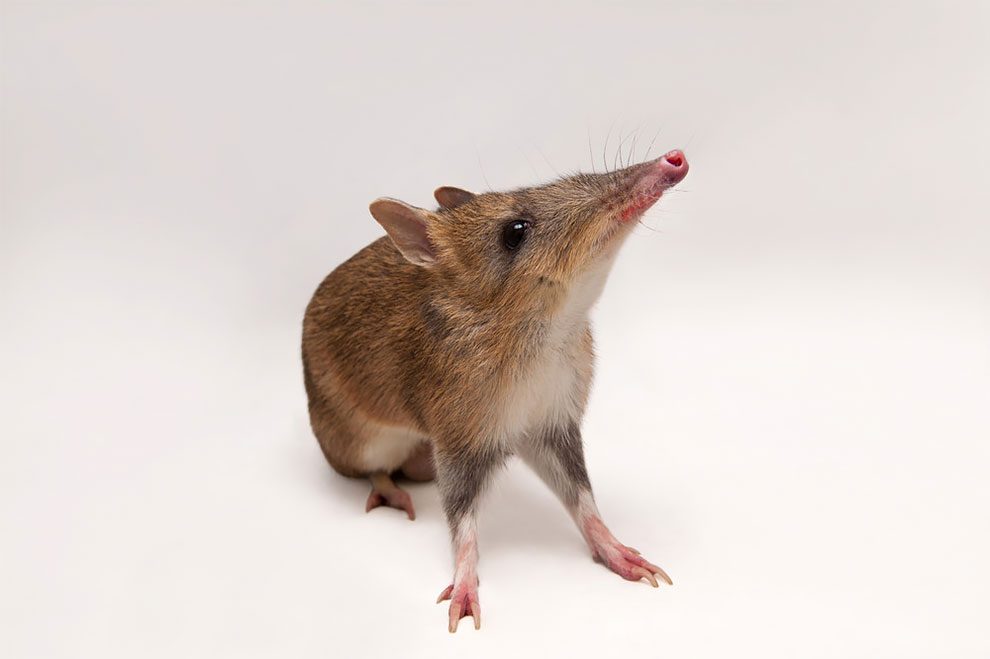
Eastern barred bandicoot. A tiny, shy, critically endangered and relatively unknown Victorian species, this little bandicoot survives only in zoos or behind predator-proof fences – the biggest threats to its survival are feral cats and foxes. With the mainland subspecies already classified as extinct in the wild, Zoos Victoria has been involved in a breeding program since the 1990s, and has bread more than 650 of the little critters. Zoos Victoria is also leading a five-year trial to find out if specially trained Maremma guardian dogs can operate as “bodyguards” to protect the bandicoots.
Joel Sartore/National Geographic Photo Ark/The Guardian
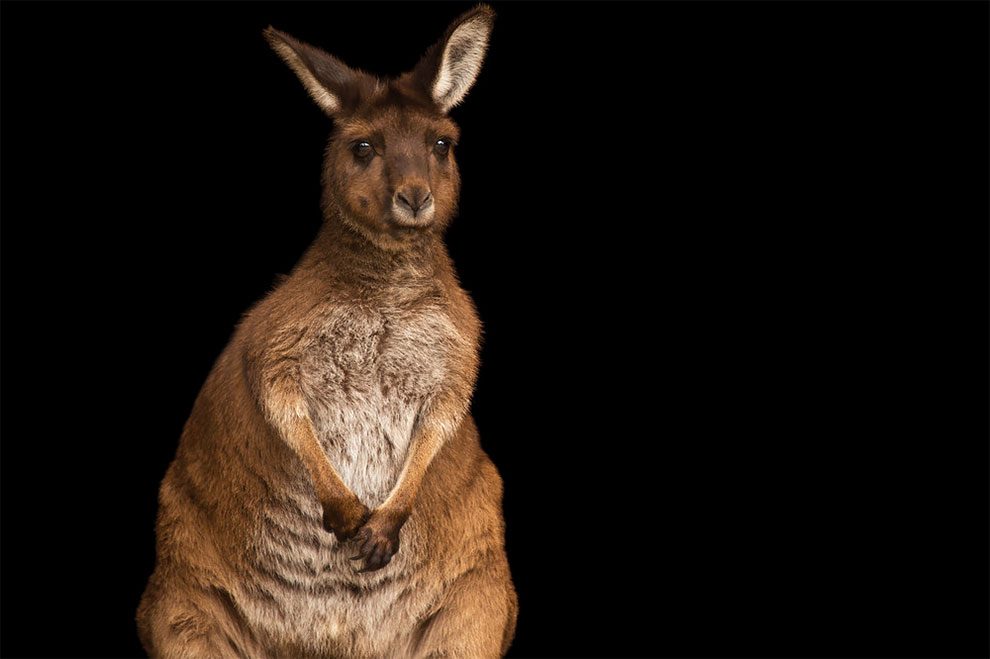
Kangaroo Island kangaroo. Kangaroos give birth to babies the size of a jellybean – and one of the first things to develop is their amazing sense of smell. The teats of the adult female act as GPS units, guiding the babies through smell into the mother’s pouch, where they can spend five months developing into a joey. Kangaroos can actually have three joeys at once – one in the birth canal, one developing and feeding in the pouch, and a third at foot who can still require their mother’s milk.
Joel Sartore/National Geographic Photo Ark/The Guardian
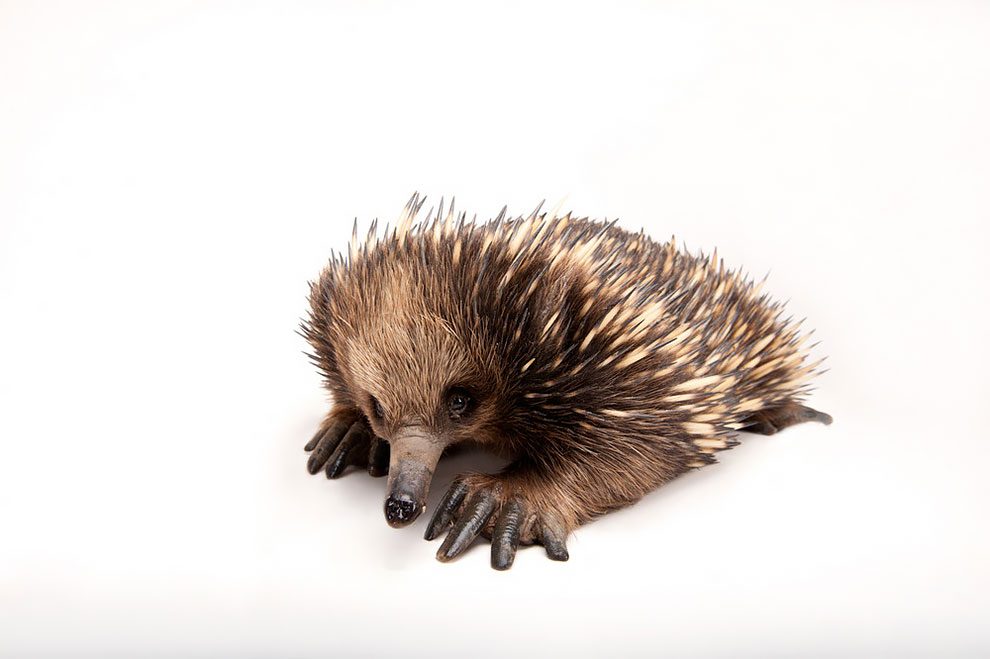
Short-nosed echidna. This species is found around Australia and in Papua New Guinea and Indonesia. An echidna’s body is covered with spines about five centimetres long, with fur growing between the spines. They eat ants, termites, grubs and worms, and use their forepaws to dig into ant nests and their fast-moving tongues, which are covered with sticky mucus, to trap the ants. Echidnas can live in most habitat types including bush, savannah, arid and semi-arid areas and rainforest.Echidna species and the platypus are the only animals in the monotremata order: mammals that lay eggs.
Joel Sartore/National Geographic Photo Ark/The Guardian
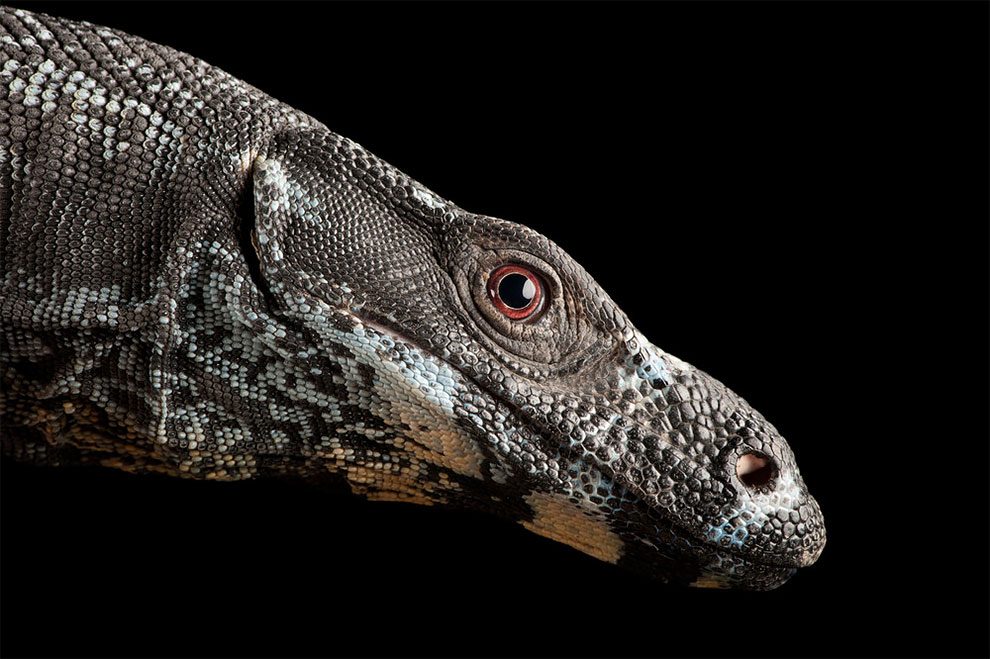
Lace monitor. Lace monitors are found throughout the east coast of Australia and around to south-eastern South Australia, living in forests and coastal tableland habitats. They rely heavily on their strong claws and agility and when threatened they head for the nearest tree and climb to safety. Their tail is very long – longer than the head and body combined – and they have a long forked tongue, and a nasty bite which is technically venomous, but poses no threat to human life. Lace Monitors are not classified as a threatened species.
Joel Sartore/National Geographic Photo Ark/The Guardian
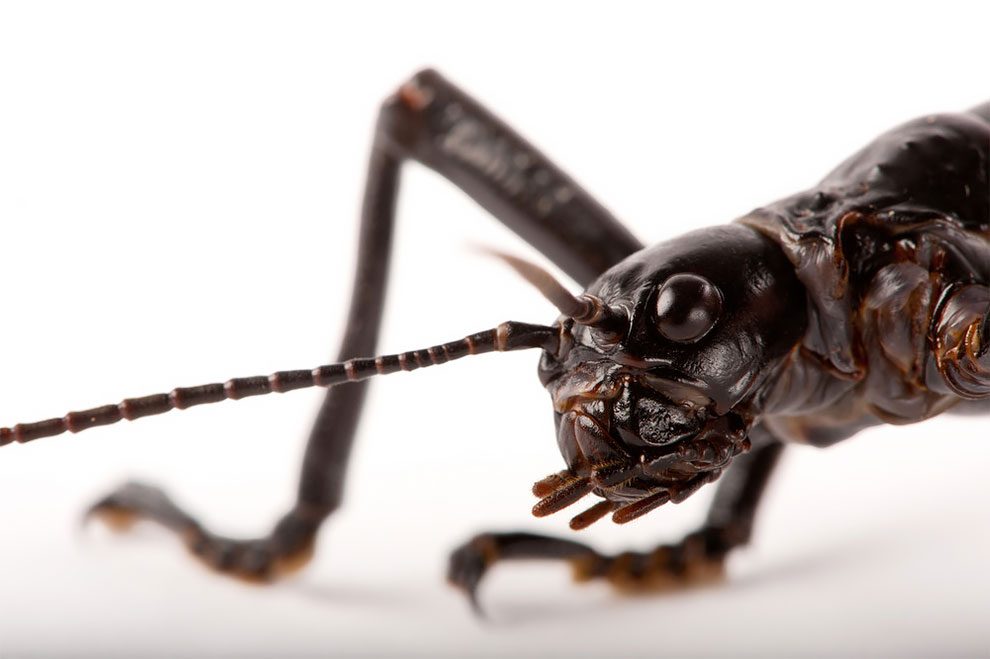
The Lord Howe Island stick insect. This insect was driven to the brink of extinction by black rats in the early 20th century, but was rediscovered in 2001 on Balls Pyramid, a rat-free volcanic outcrop 23km off the coast of Lord Howe Island. A rescue team leapt ashore in 2003 and brought two breeding pairs back to mainland Australia, who became the founding individuals of the captive breeding population at Melbourne zoo. Adult Lord Howe Island stick insects are wingless and nocturnal, feeding only on one species of shrub. Melbourne zoo continues to learn about this native species.
Joel Sartore/National Geographic Photo Ark/The Guardian
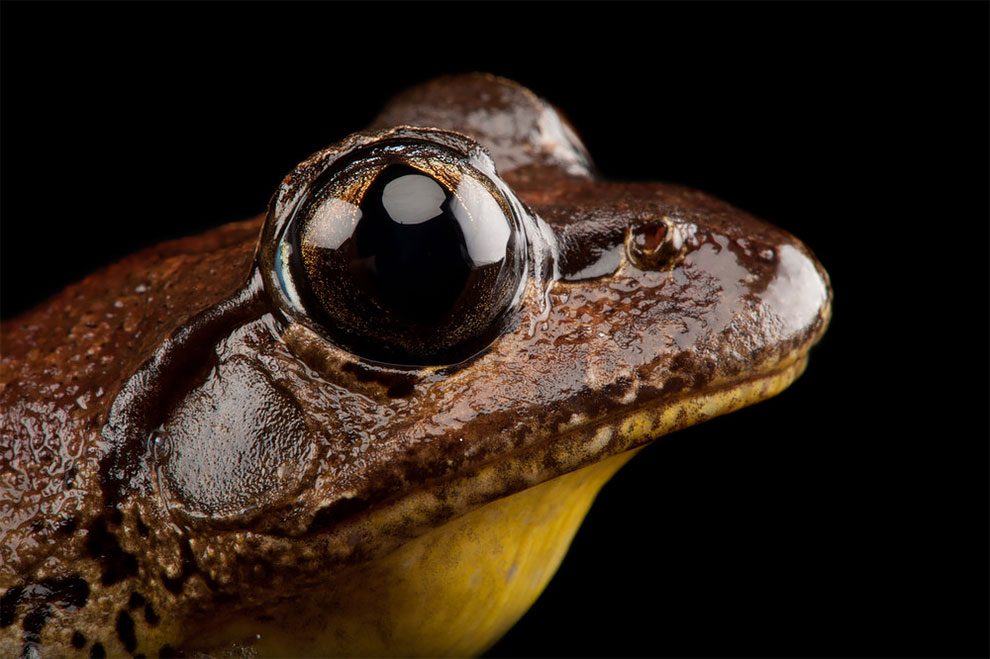
Stuttering frog. The stuttering frog has a call like a kookaburra in a hurry: “kook kook kook kra-a-ak … kruk … kruk”. Quite a chunky frog (up to eight centimetres in length), it is also known as the southern barred frog because of the stripes on its arms and legs. Stuttering frogs live near fast-flowing streams in the wet forests along the east coast of Australia, from north-eastern Victoria to southern Queensland – but have only been found in Victoria on three occasions, and may now be extinct in this state. Many populations of stuttering frogs have disappeared.
Joel Sartore/National Geographic Photo Ark/The Guardian
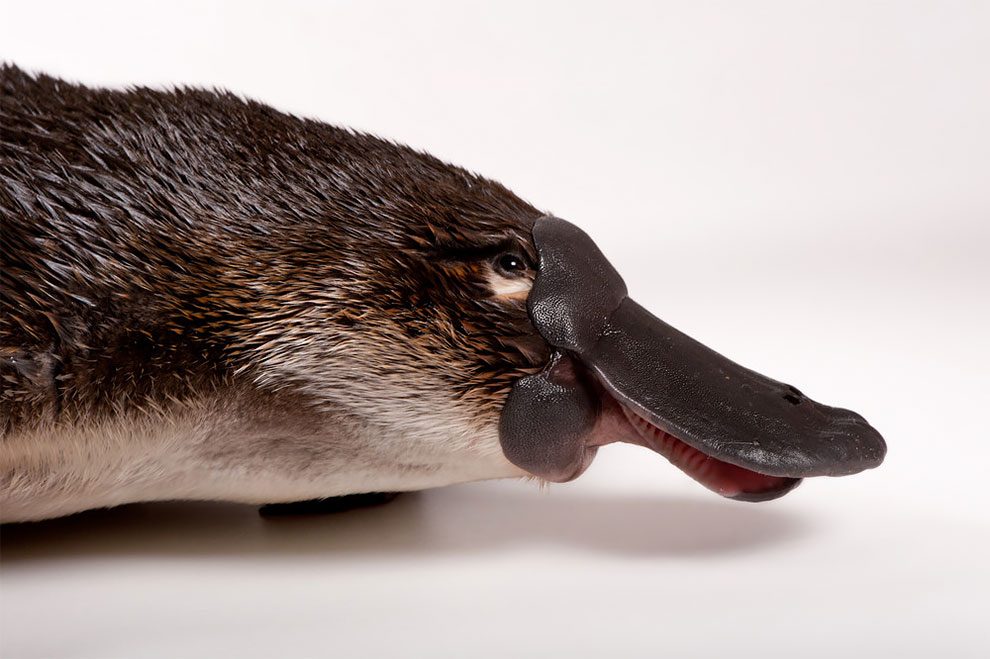
Platypus. The thick brown fur of the platypus traps an insulating layer of air next to their skin, and the males have a venomous spur on the inside of their hind legs. The bill resembles that of a duck, but is covered with soft, leathery skin containing sensitive nerves that can detect faint electrical fields generated by small aquatic animals that they prey on – unique among mammals. The webbed front paws are used like paddles when they swim, which they do with their eyes and ears closed, using their sensitive bill to sweep the water for prey. Platypuses can stay underwater for several minutes.
Joel Sartore/National Geographic Photo Ark/The Guardian
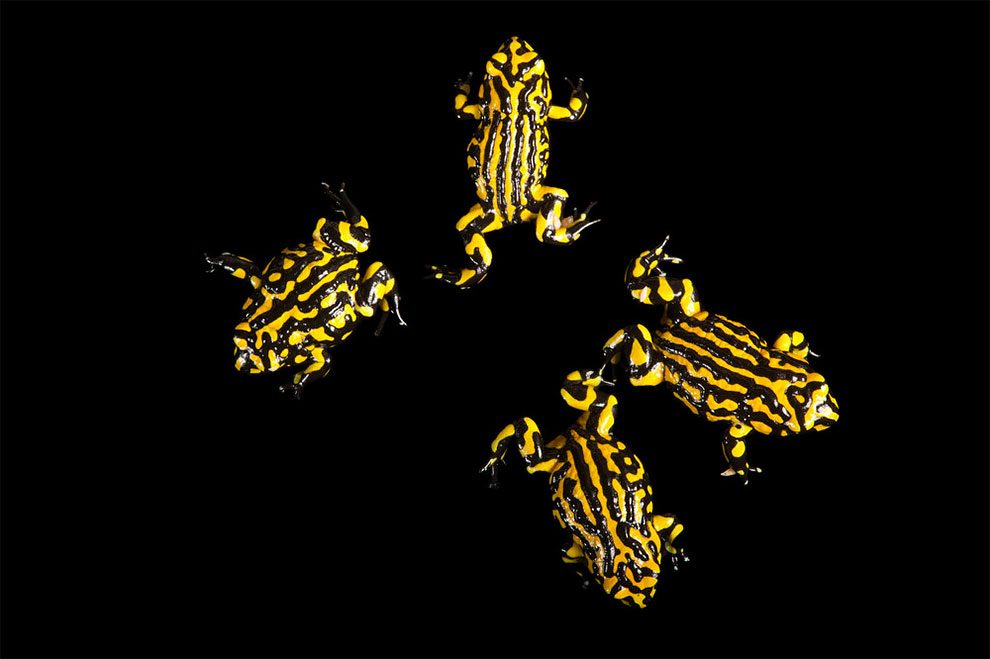
Southern corroboree frogs. This frog only occurs in montane and alpine environments in Kosciusko National Park, and is under threat from disease and climate change. It is at risk of extinction in the wild mainly due to chytridiomycosis, a disease caused by infection with amphibian chytrid fungus. It’s estimated there are less than 100 individuals left in the wild. Captive breeding is the only way to maintain genetic variation and prevent complete extinction of this frog species, and a national recovery program is in place to save them.
Joel Sartore/National Geographic Photo Ark/The Guardian
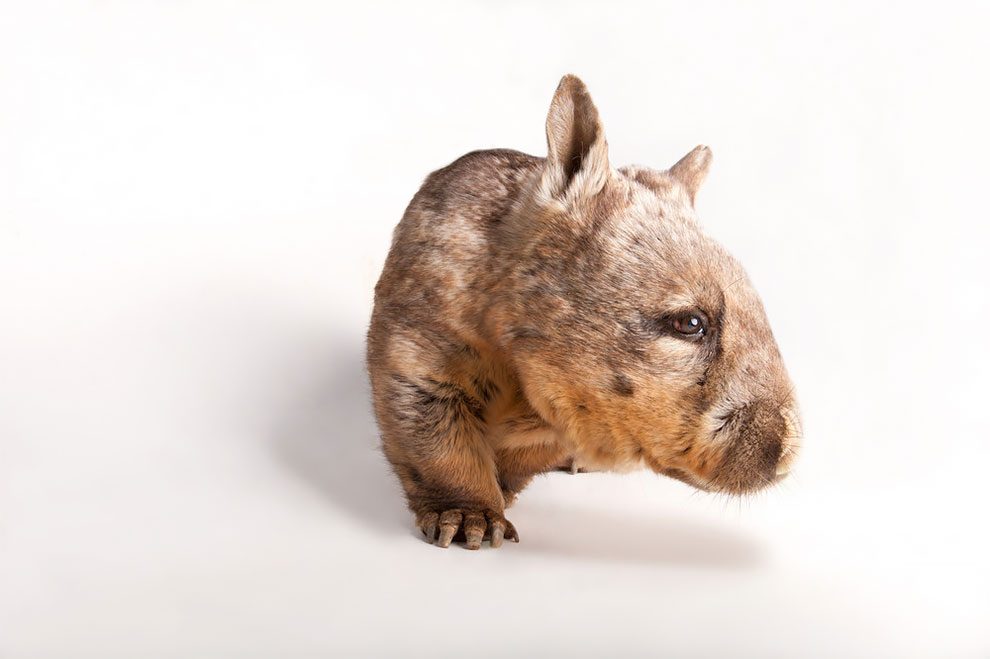
Southern hairy-nosed wombat. The most social of the three wombat species, the southern hairy-nosed wombat is found in parts of southern Australia and south-east Western Australia. They are similar in size and shape to the common wombat, with silkier fur, long ears and furry muzzles. Wombats are solid and stocky, with short legs, large front feet, and bear-like claws. The second and third toes of the hind feet are fused, with a double claw used in grooming. Wombats’ legs and shoulders are powerful and they use their front legs for digging burrows.
Joel Sartore/National Geographic Photo Ark/The Guardian
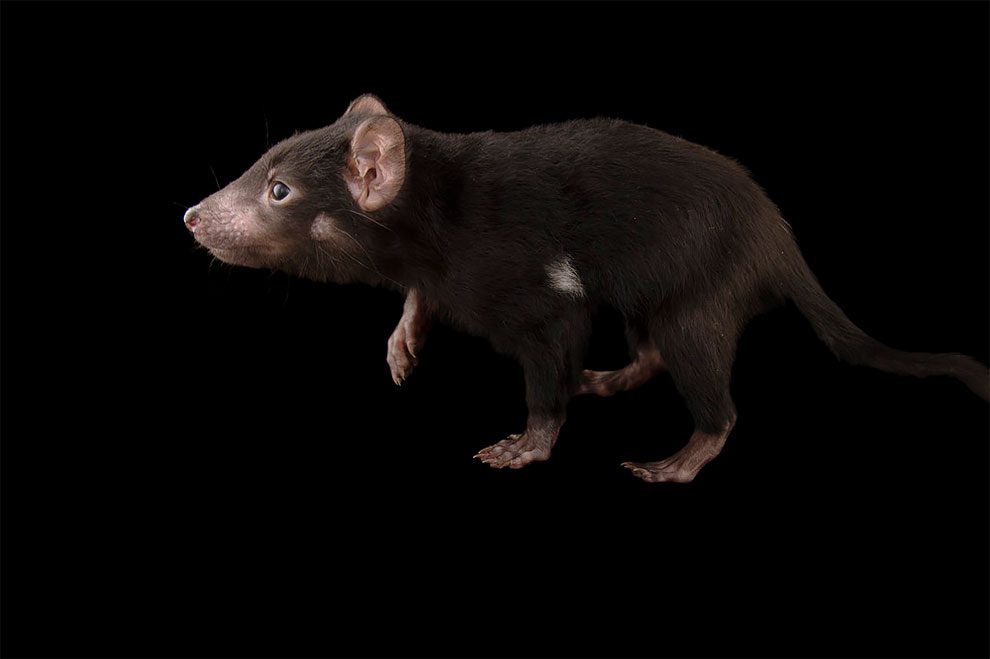
Tasmanian devil. The largest carnivorous marsupials in the world, devils once occurred on mainland Australia, but have been confined to Tasmania since before colonisation. Tasmanian devils are threatened by devil facial tumour disease, a contagious cancer which causes tumours around the mouth, face and neck. The disease develops rapidly and is fatal: affected animals die within six months of the lesions first appearing. As of February 2010, it had spread across approximately 60% of Tasmania and caused a rapid decline in wild devil populations. The species is now listed as endangered.