Pandas Get To Know Their Wild Side
Pandas are one of the world’s most beloved bears, an animal that is not only adorable to many, but also a cultural icon, an economic mainstay and a source of national pride in China – the only country in which these Asian bears still survive.
Ami Vitale’s work focuses on compelling wildlife stories, and her images in this collection show the incredible progression of pandas bred in captivity: from infancy to release into the wild.
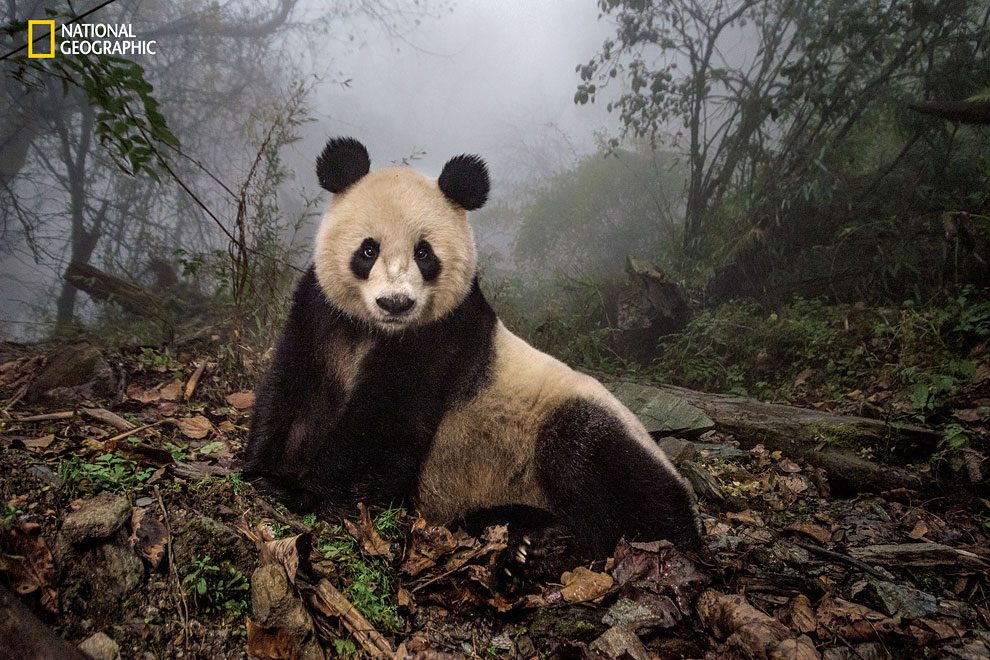
Here: Ye Ye, a 16-year-old giant panda, lounges in a wild enclosure at a conservation center in Wolong Nature Reserve. Her name, whose characters represent Japan and China, celebrates the friendship between the two nations. Ye Ye’s cub Hua Yan (Pretty Girl) is being trained for release into the wild. (Photo by Ami Vitale / National Geographic)
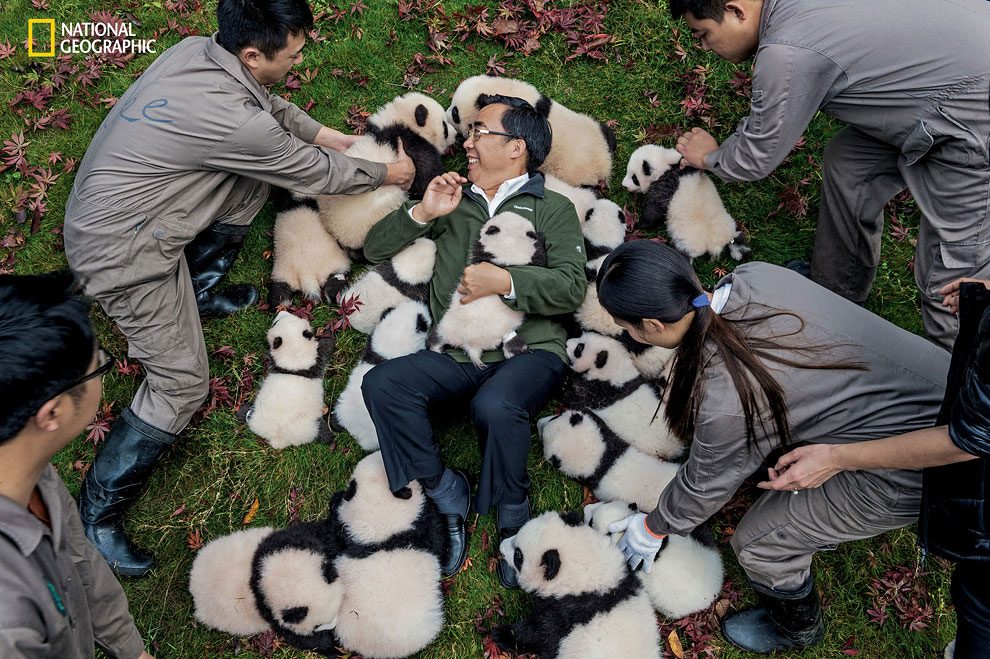
Zhang Hemin—“Papa Panda” to his staff—poses with cubs born in 2015 at Bifengxia Panda Base. “Some local people say giant pandas have magic powers,” says Zhang, who directs many of China’s panda conservation efforts. “To me, they simply represent beauty and peace.” (Photo by Ami Vitale / National Geographic)
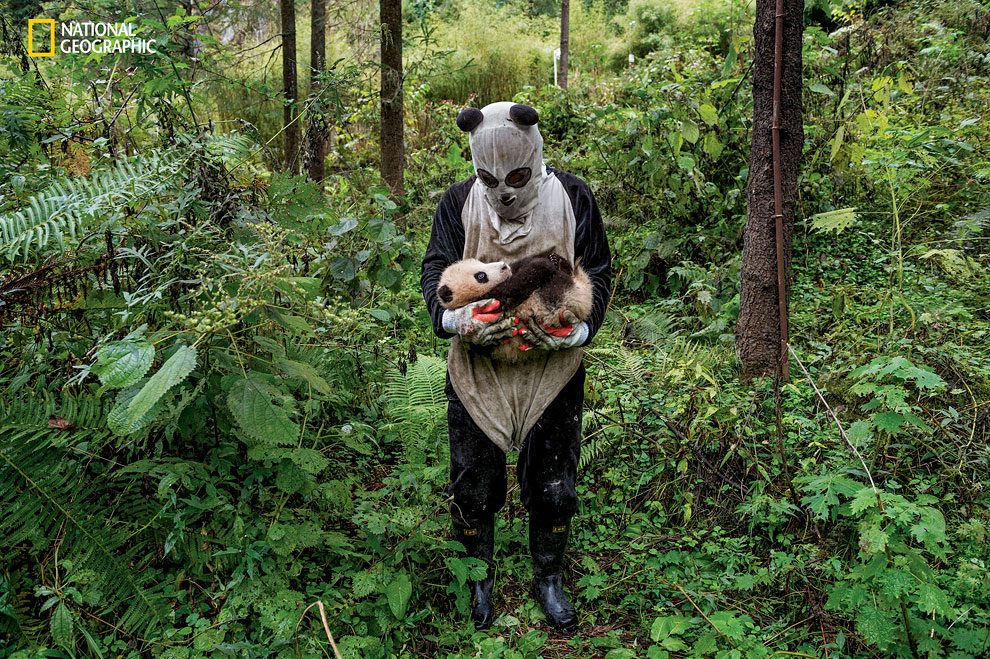
Is a panda cub fooled by a panda suit? That’s the hope at Wolong’s Hetaoping center, where captive-bred bears training for life in the wild are kept relatively sheltered from human contact, even during a rare hands-on checkup. (Photo by Ami Vitale / National Geographic)
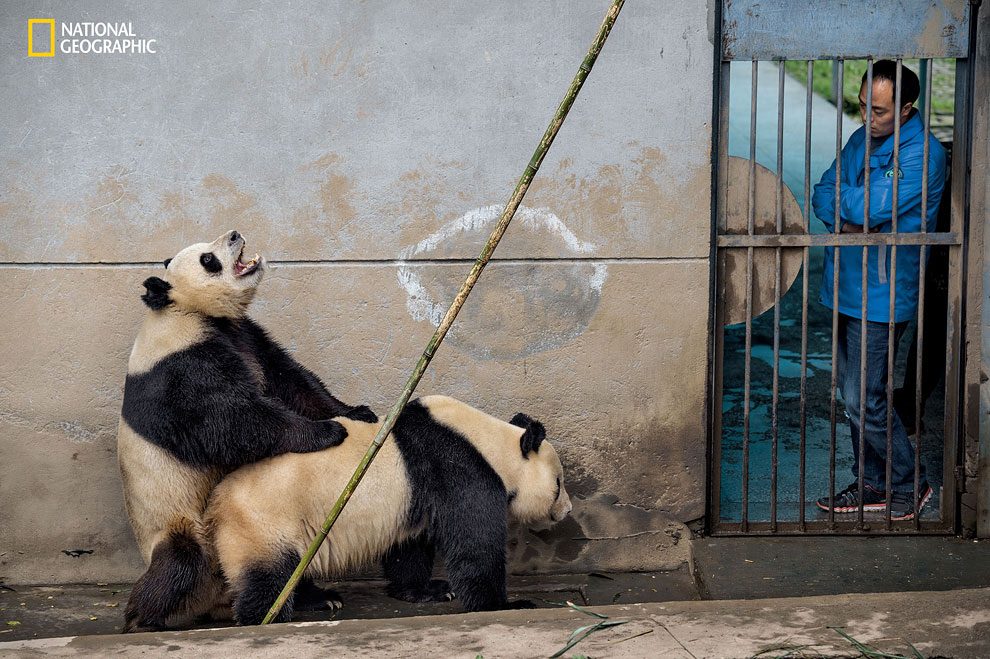
At Bifengxia, bears mate under keepers’ watch—a far cry from the privacy they have in the wild. The panda base’s operators are finding ways to allow for natural reproductive behaviors such as scent marking, mate choice, and male competition. (Photo by Ami Vitale / National Geographic)
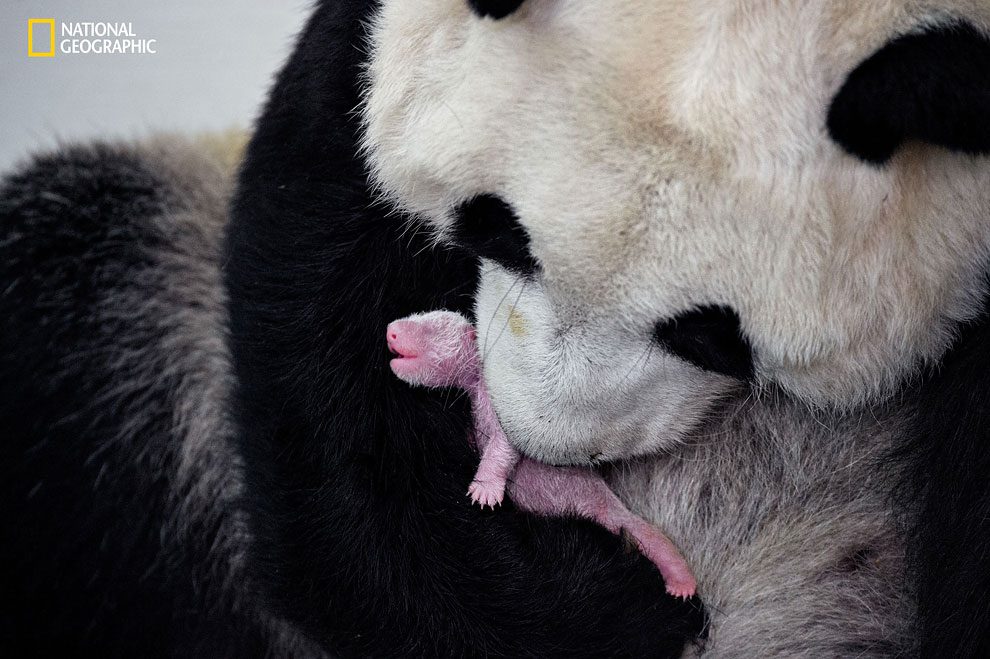
Blind, nearly hairless, squeaky, and 1/900 the size of its mother, a newborn panda is as needy as it gets. But it won’t be for long: The panda is among the fastest growing mammals, increasing from around four ounces to four pounds in its first month. (Photo by Ami Vitale / National Geographic)
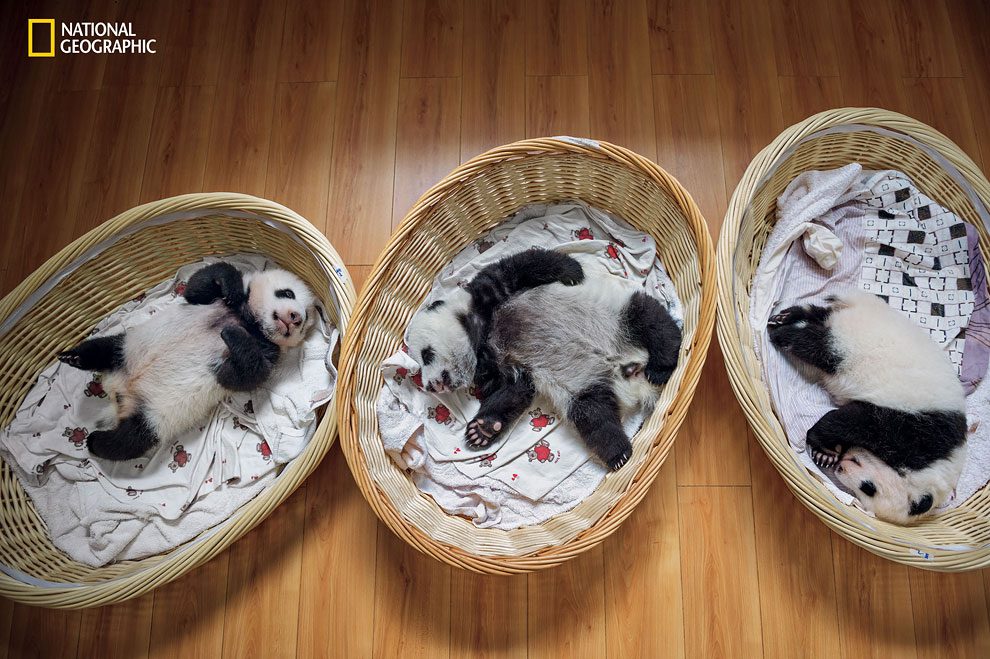
Three-month-old cubs nap in the panda nursery at Bifengxia. A panda mother that bears twins usually fails to give them equal attention. Keepers reduce the load by regularly swapping cubs in and out—making sure each gets both human and panda-mom care. (Photo by Ami Vitale / National Geographic)
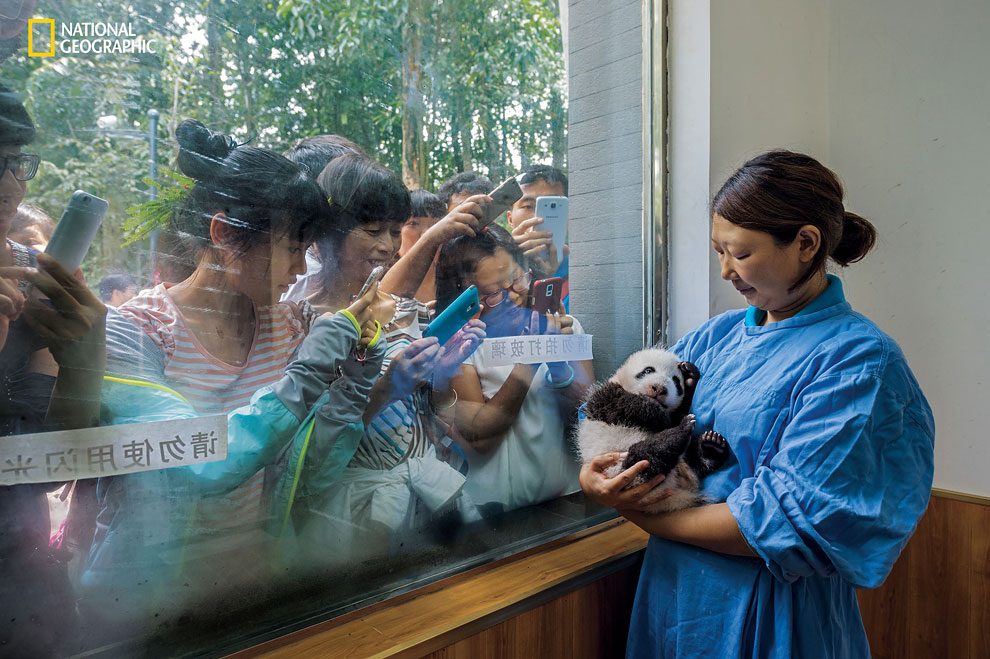
Caretaker Li Feng cradles her precious charge by the window of Bifengxia’s panda nursery, the most popular stop for visitors touring the facilities. More than 400,000 people visit each year to glimpse and snap photos of China’s most beloved baby animals. (Photo by Ami Vitale / National Geographic)
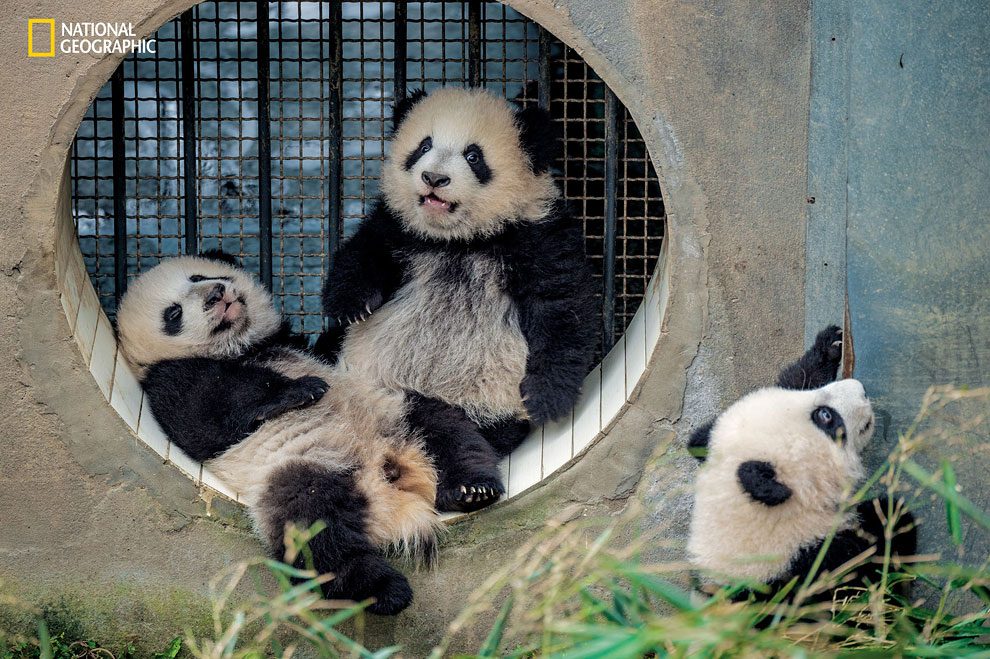
Triple the cuteness—and the work. One mom cares for all these cubs, only one of which she bore. Transferring a weak or rejected infant from its birth mother to a surrogate is helping boost cub survival at panda breeding centers. (Photo by Ami Vitale / National Geographic)
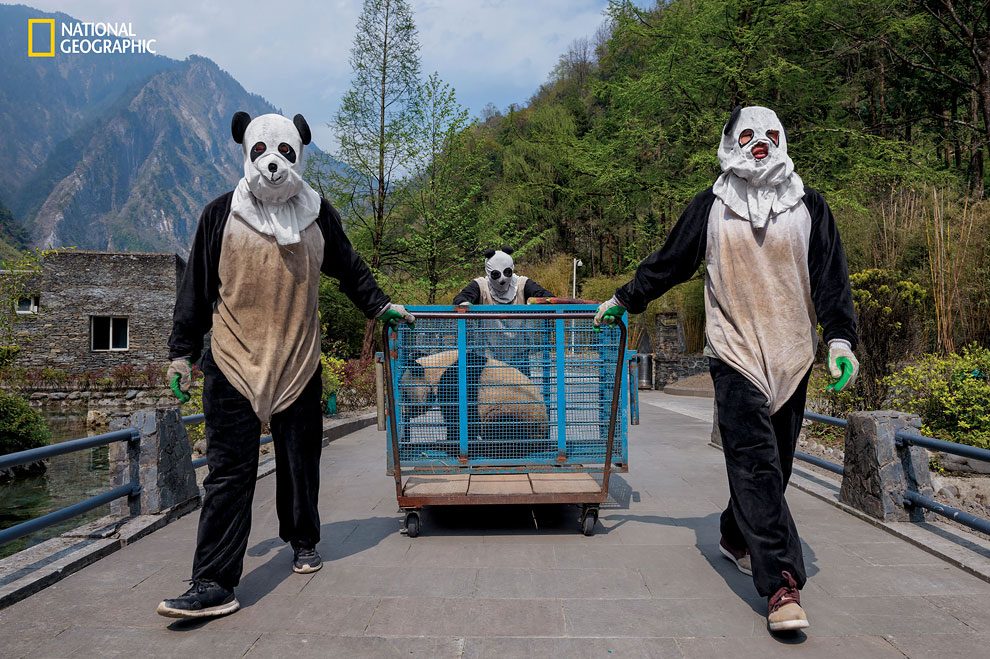
Wolong Reserve keepers transport Hua Jiao (Delicate Beauty) for a health check before she finishes “wild training.” The habitat also protects red pandas, pheasant, tufted deer, and other species that benefit from giant panda conservation. (Photo by Ami Vitale / National Geographic)
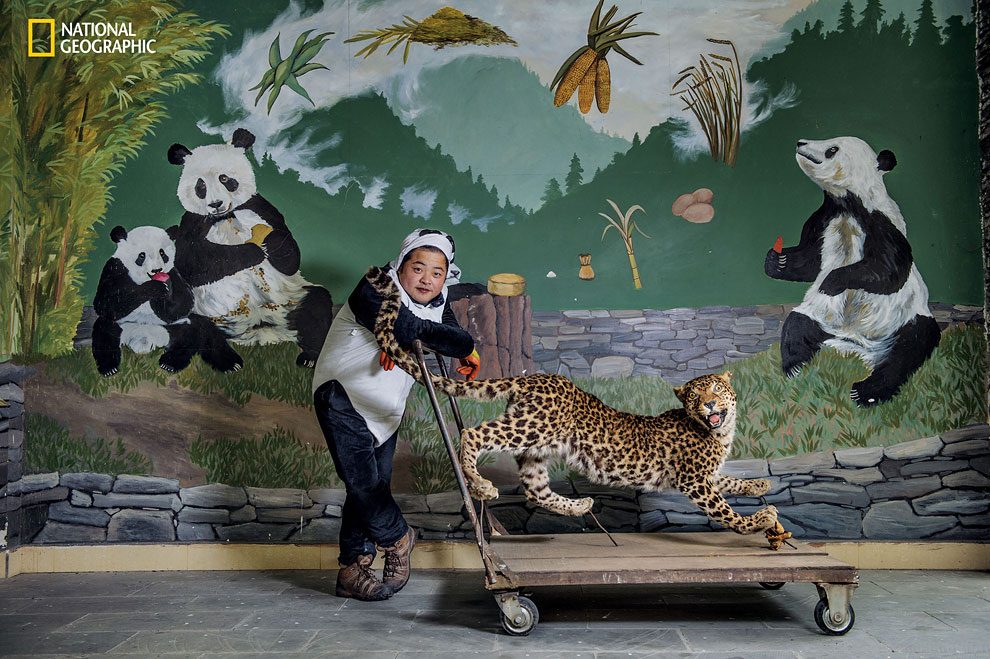
Gao Xiaowen poses with the stuffed leopard that Wolong keepers use to train young pandas to fear their biggest wild foe. A cub’s reactions to the “predator” and its recorded growls help determine if the bear is prepared to survive on its own. (Photo by Ami Vitale / National Geographic)
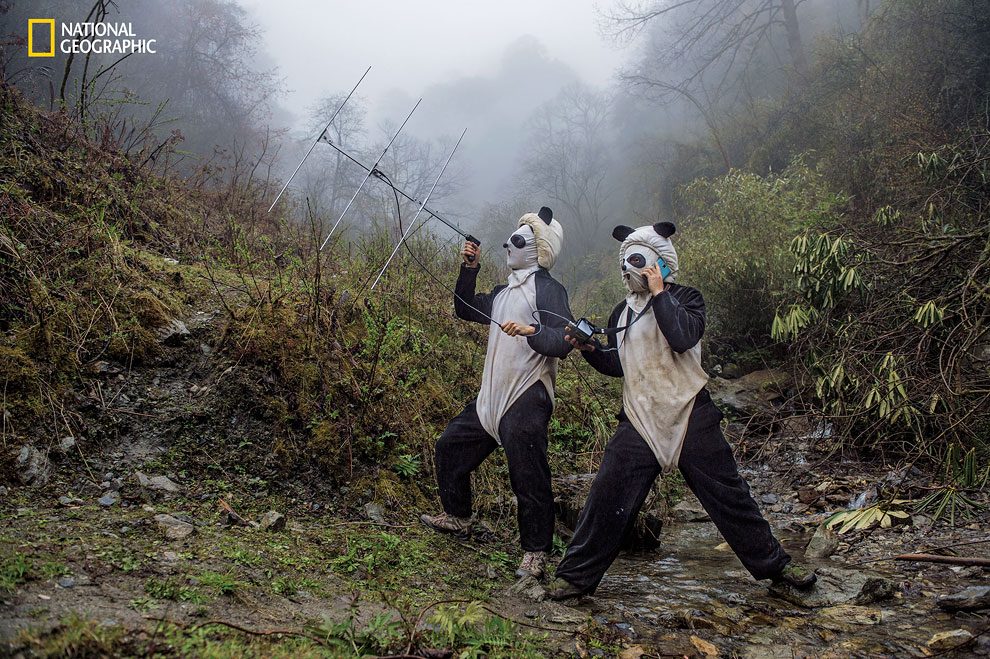
In a large forested enclosure of the Wolong Reserve, panda keepers Ma Li and Liu Xiaoqiang listen for radio signals from a collared panda training to be released to the wild. Tracking can tell them how the cub is faring in the rougher terrain up the mountain. (Photo by Ami Vitale / National Geographic)
More Inspiring Stories
Can You Count How Many Seals There Are Selling Seashells By The Seashore?

The Adorable Photo Series Shows Curvy Canines And Flexible Felines Participating In A Spot Of Yoga
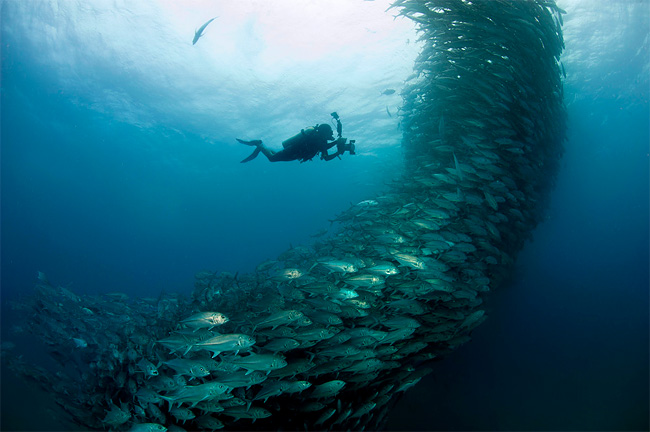
Fish Tornado
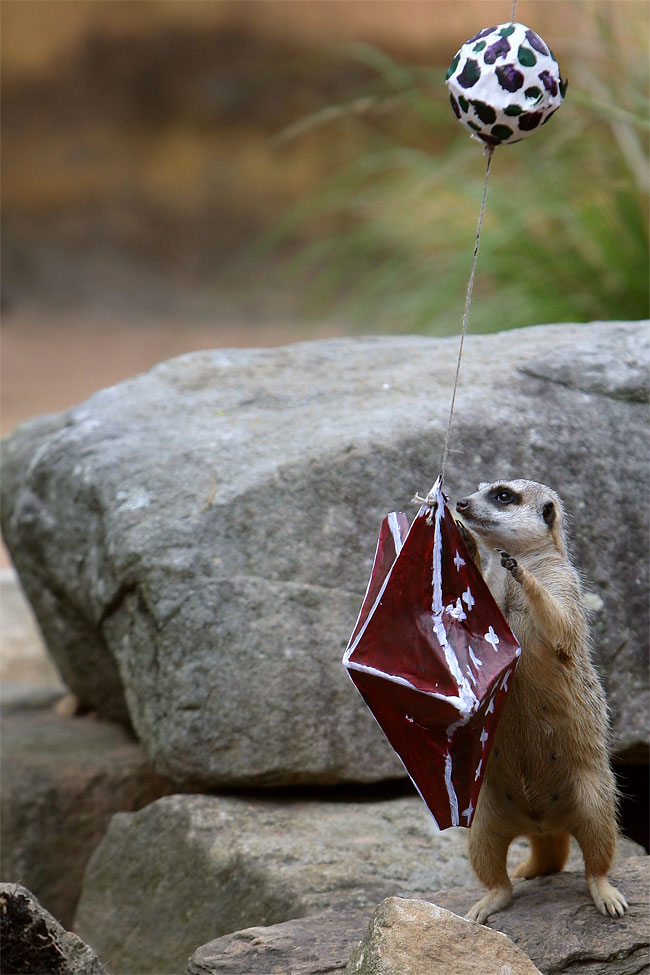
Taronga Zoo Animals Recieve Christmas Gifts
Forget Diamonds - A Lynx Is This Girl's Best Friend: Russian Family Share Their Home With Big Wildcat
Baby Pygmy Hippopotamus Is Ridiculously Cute!

Clever Ads Feature Classic Artists Photographing Their Self Portrait
Flash-Frozen Fish in Norway
Deer Enjoy Cherry Blossoms In An Empty Park In Nara, Japan
These Panda Selfies Are The Opposite Of Cute

Two People Dressed as the Twin Towers at the Halloween Parade in Greenwich Village, New York City, 2001
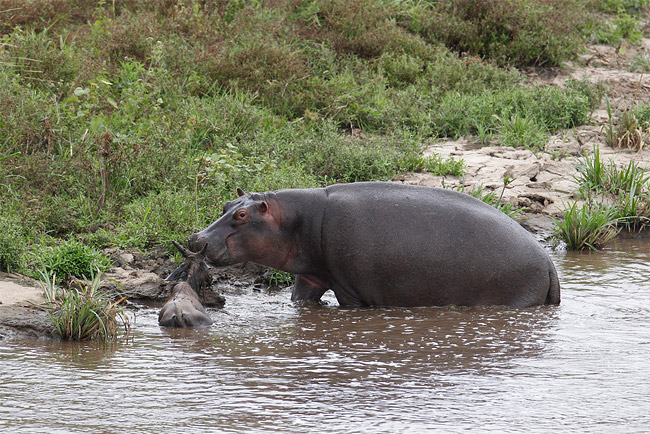
Hippo Saves Gnu from Crocodile

Artist Crafts Imaginative Illustrations Transforming Common Items into Novel Creations
An Artist Created A Needle-Felt Realistic Sculptures Inspired By Real Animals
Epic Photos Of The Divers Swim With Sperm Whales
There’s A Species Of Wild Cats Where The Adults Look Like Kittens Their Entire Lives

Girls And Their Adopted Cats Beautifully Captured By NYC-Based Photographer

Vancouver Cops, Four-Legged Pals Pose For 2019 Police Dog Charity Calendar
Adorable Mother-Daughter Tattoos That Show Their Unbreakable Bond
Rest in Peace. 'World's Angriest Cat' Colonel Meow is Dead.
Finally, The 2022 Cats On Catnip Calendar Is Here!

Funny Greeting Cards Featuring The Thoughts Of An Angry Cat

Funniest Animal Fails Caught In Panoramic Pictures

Bride-to-be Whose Fiance Died Just Days Before Their Wedding Has A Heartbreaking Photo Shoot In Her Dress ‘To Say Goodbye’

Vintage Mugshots of Victorian Child Offenders Jailed for Stealing Items for Christmas Day
'Biggest Dinosaur Ever' Discovered

Guy Without A Date Does Epic Photoshoot With His Pug Instead

This Dog Recreated Madonna’s Iconic Photos, And It’s Brilliant

Totally Pointless Gallery of The Cats 'Performing' On Synthesizers In Space