Sky Burial – Tibetans Perform Celestial Burial Ceremony (NSFW)
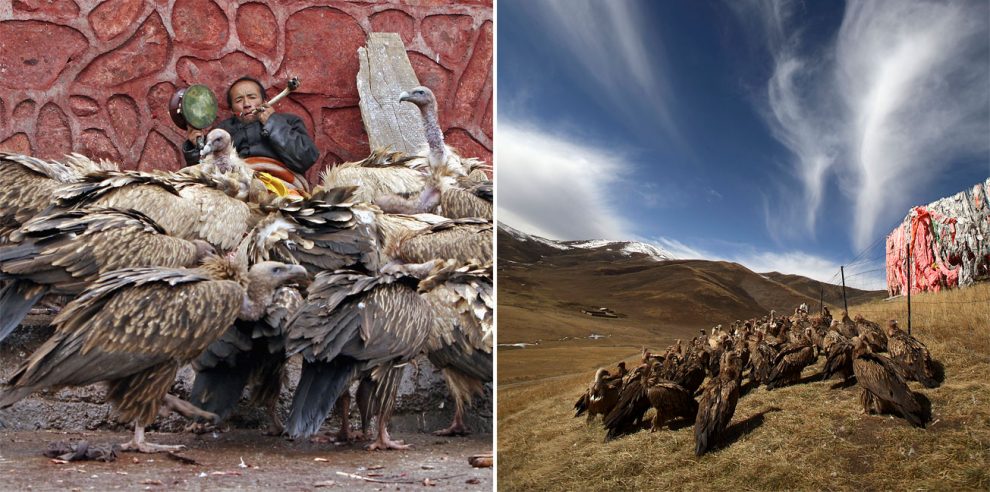
China Photos/Getty Images
Sky burial or ritual dissection was once a common funerary practice in Tibet wherein a human corpse is cut in specific locations and placed on a mountaintop, exposing it to the elements or the mahabhuta and animals – especially to birds of prey. The location of the sky burial preparation and place of execution are understood in the Vajrayana traditions as charnel grounds. In Tibet the practice is known as jhator (Tibetan: བྱ་གཏོར་; Wylie: bya gtor), which literally means, “giving alms to the birds.”
The majority of Tibetans adhere to Buddhism, which teaches rebirth. There is no need to preserve the body, as it is now an empty vessel. Birds may eat it, or nature may let it decompose. So the function of the sky burial is simply the disposal of the remains. In much of Tibet the ground is too hard and rocky to dig a grave, and with fuel and timber scarce, a sky burial is often more practical than cremation.
The Tibetan sky-burial practices appear to have evolved out of practical considerations but can also be related to ancient places of sky burial such as Göbekli Tepe (11,500 years bp) and Stonehenge (4,500 years bp). Most of Tibet is above the tree line, and the scarcity of timber makes cremation economically unfeasible. Additionally, subsurface interment is difficult since the active layer is not more than a few centimeters deep, with solid rock or permafrost beneath them.
The customs are first recorded in an indigenous 12th century Buddhist treatise known colloquially as the Book of the Dead (Bardo Thodol). Tibetan tantricism appears to have influenced the procedure. Dissection occurs according to instructions given by a lama or tantric adept.
Prior to the procedure, monks may chant mantra around the body and burn juniper incense – although ceremonial activities often take place on the preceding day. The work of disassembling of the body may be done by a monk, or, more commonly, by rogyapas (“body-breakers”). All the eyewitness accounts remarked on the fact that the rogyapas did not perform their task with gravity or ceremony, but rather talked and laughed as during any other type of physical labor. According to Buddhist teaching, this makes it easier for the soul of the deceased to move on from the uncertain plane between life and death onto the next life
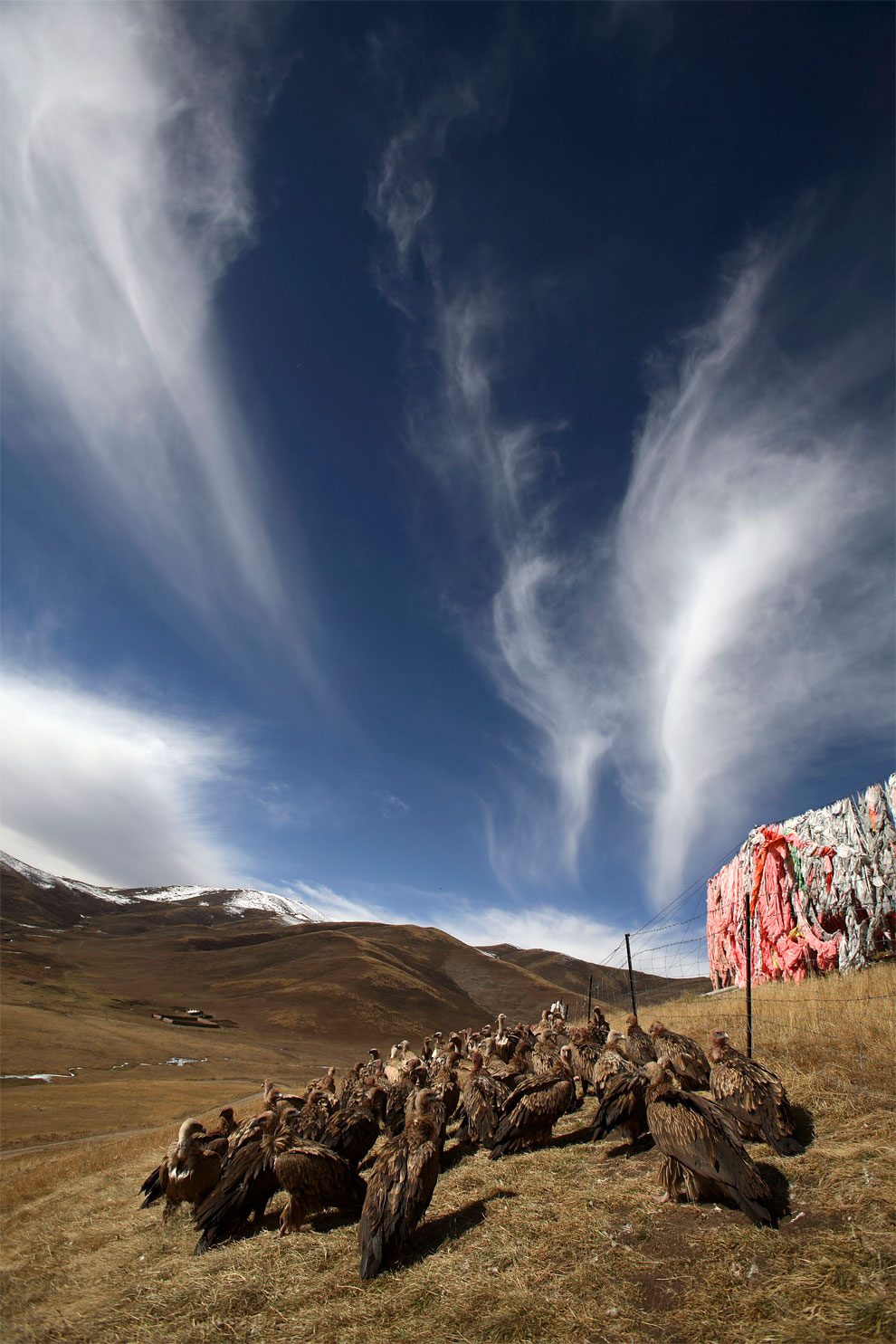
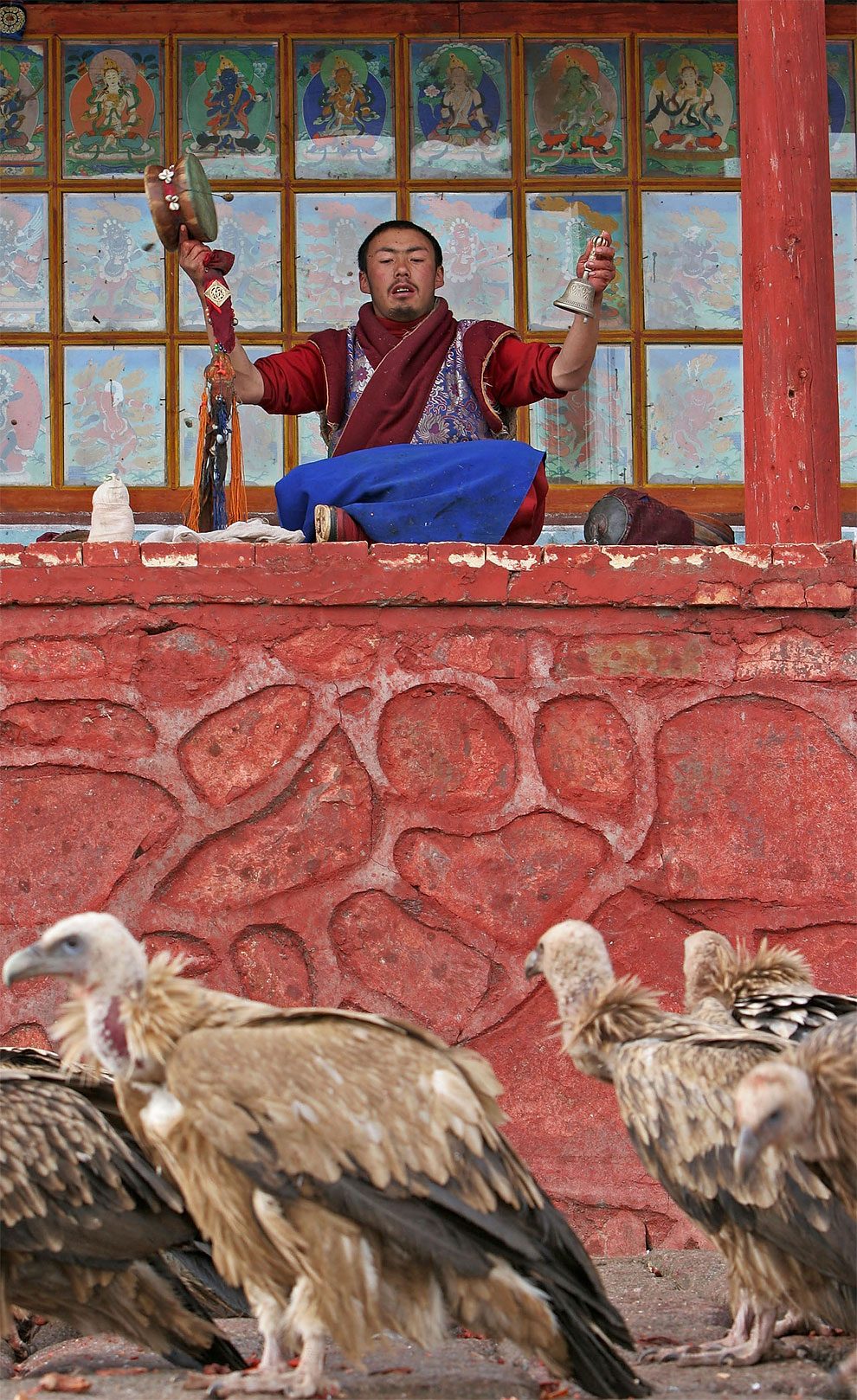
Vultures rest in the “Prayer Flags City” built for celestial burial ceremonies, where the burial masters pray for the dead, at the Chalang Temple in Dari County of Guoluo Prefecture, Qinghai Province, northwest China:
China Photos/Getty Images
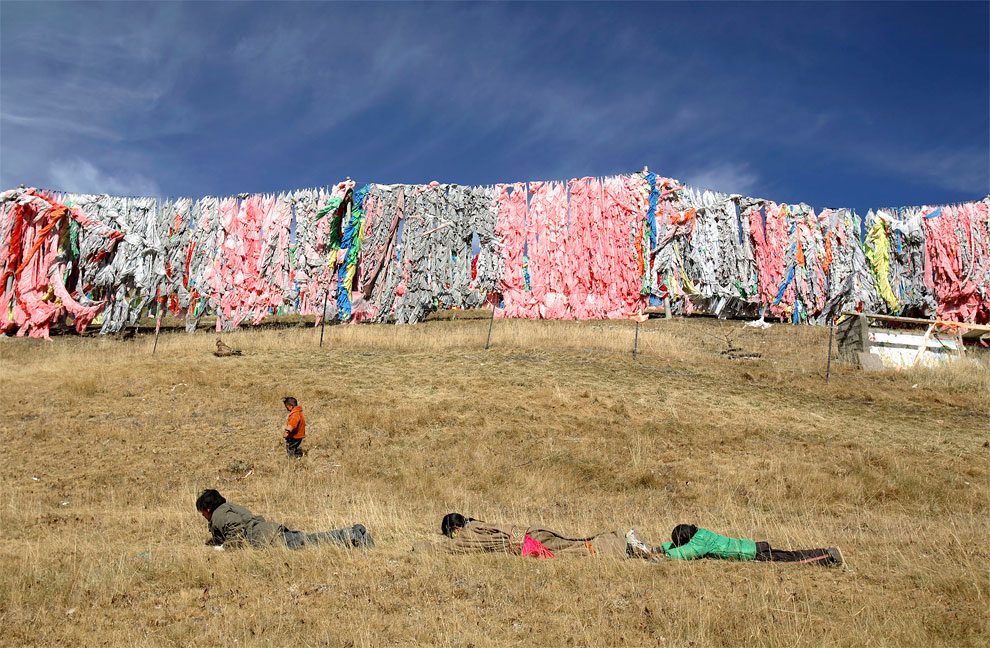
A relative of the dead prays during a celestial burial ceremony at the Chalang Temple:
China Photos/Getty Images
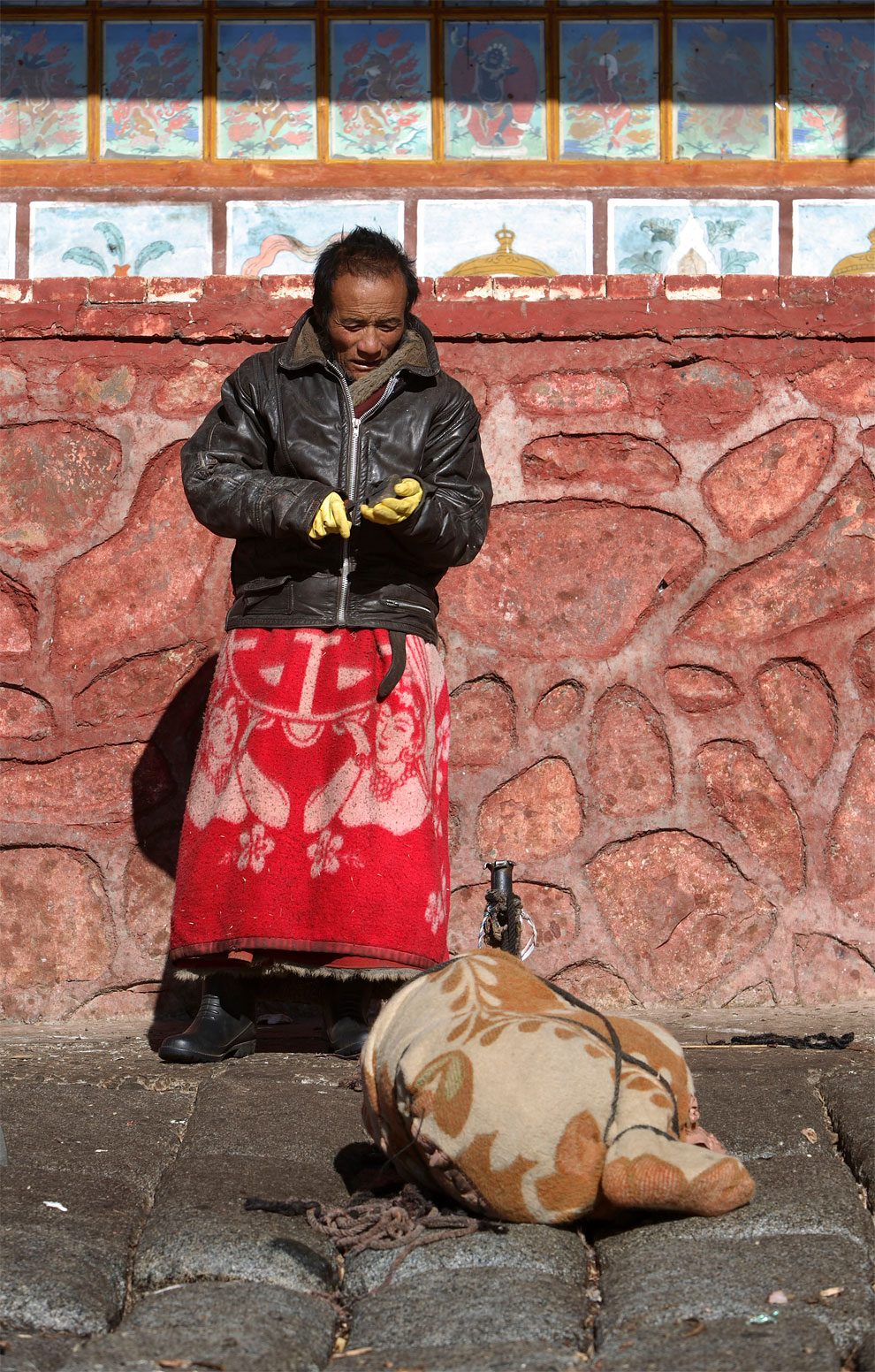
A burial master grinds a knife before a celestial burial ceremony at the Chalang Temple:
China Photos/Getty Images
Celestial burial is a traditional funeral of Tibetan people, which began in the 7th century. When the ceremony is held, aromatic plants are burnt for smoke to guide the soul to reach the celestial burial ground. The body of the dead, placed in a sitting stance, is sliced by a celestial burial master, then offered to vultures, which are called “holy eagles”. Tibetans believe the vulture can help the dead gain merits and virtues. A burial master can earn about 100 yuan (approximately USD 13.5) for handling every burial.
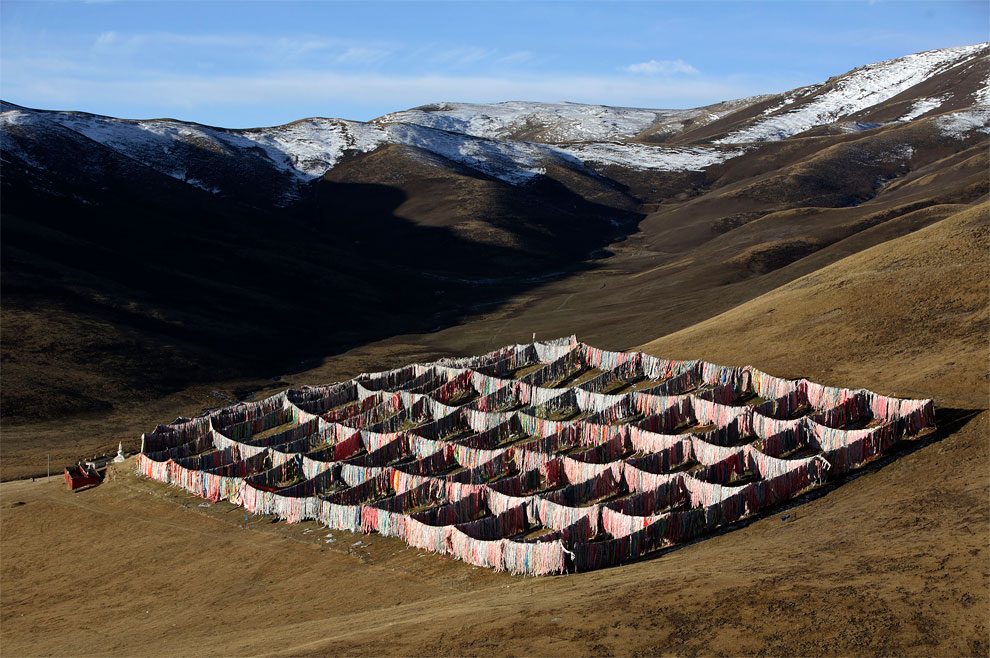
A “Prayer Flags City” built for celestial burial ceremonies, where the burial masters pray for the dead:
China Photos/Getty Images
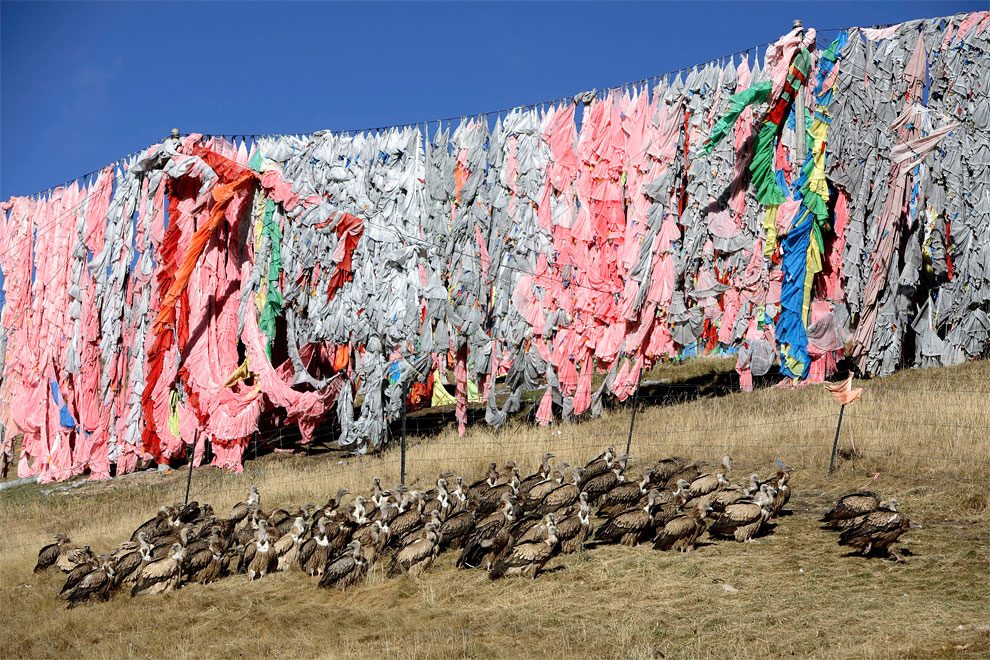
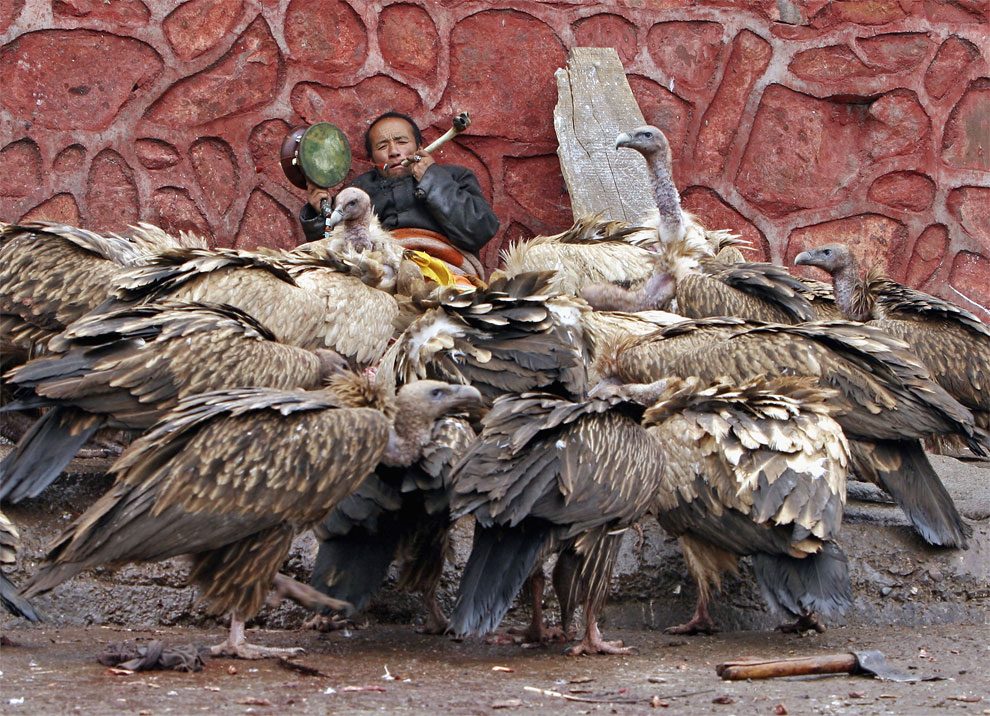
Vultures rest in the “Prayer Flags City” built for celestial burial ceremonies, where the burial masters pray for the dead:
China Photos/Getty Images
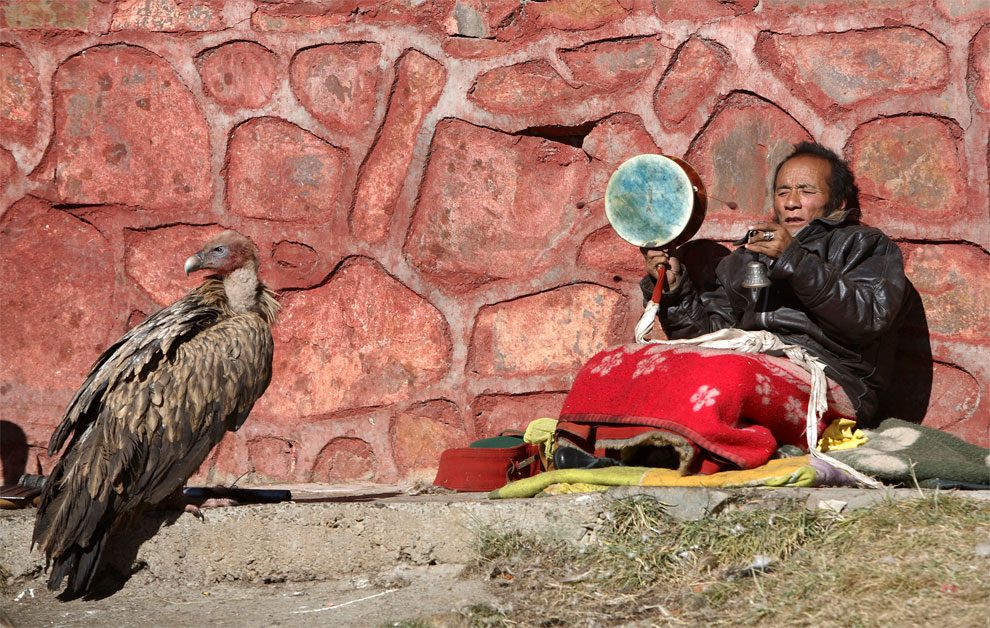
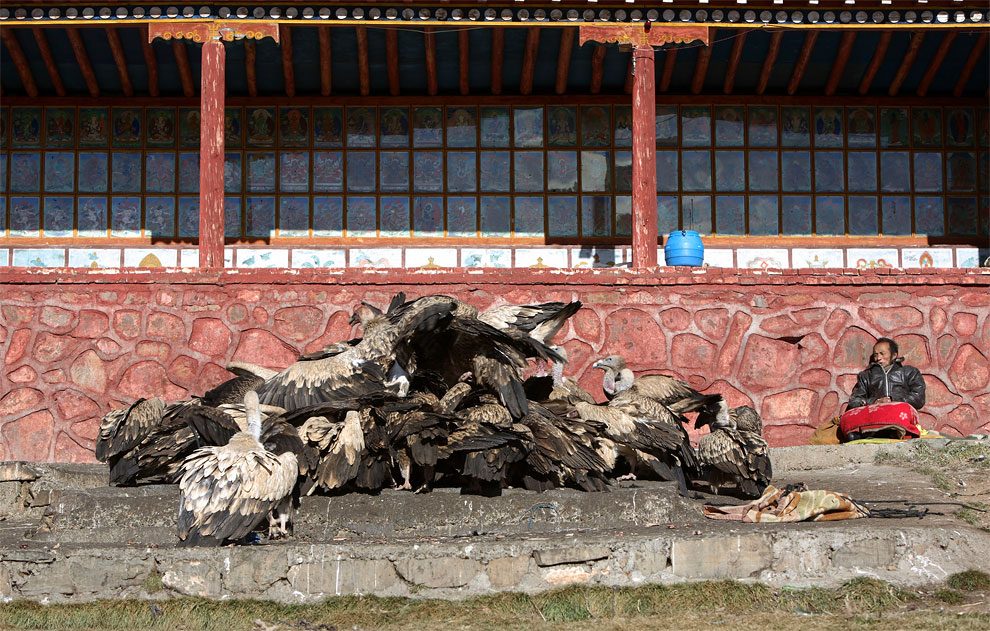
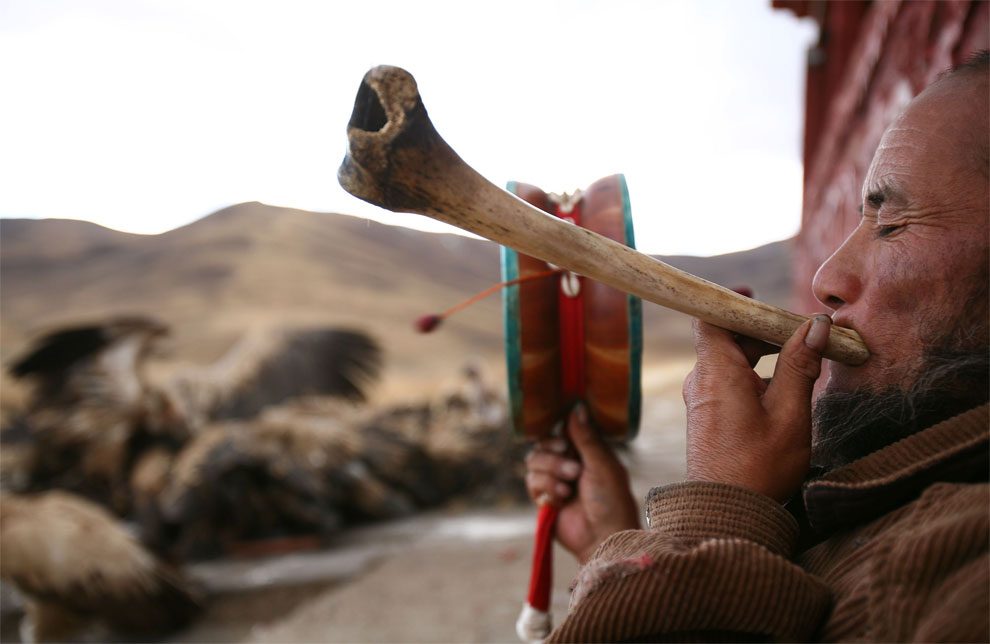
A burial master prays during a celestial burial ceremony at the Chalang Temple:
China Photos/Getty Images
China Photos/Getty Images
A burial master smashes bones of a body to feed vultures during a celestial burial ceremony:
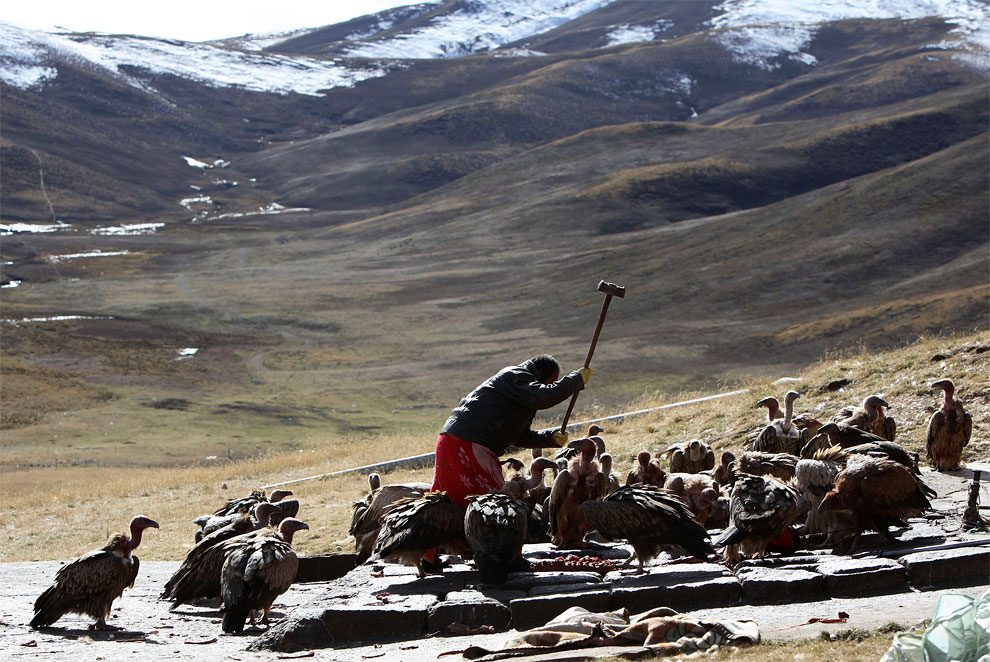
China Photos/Getty Images
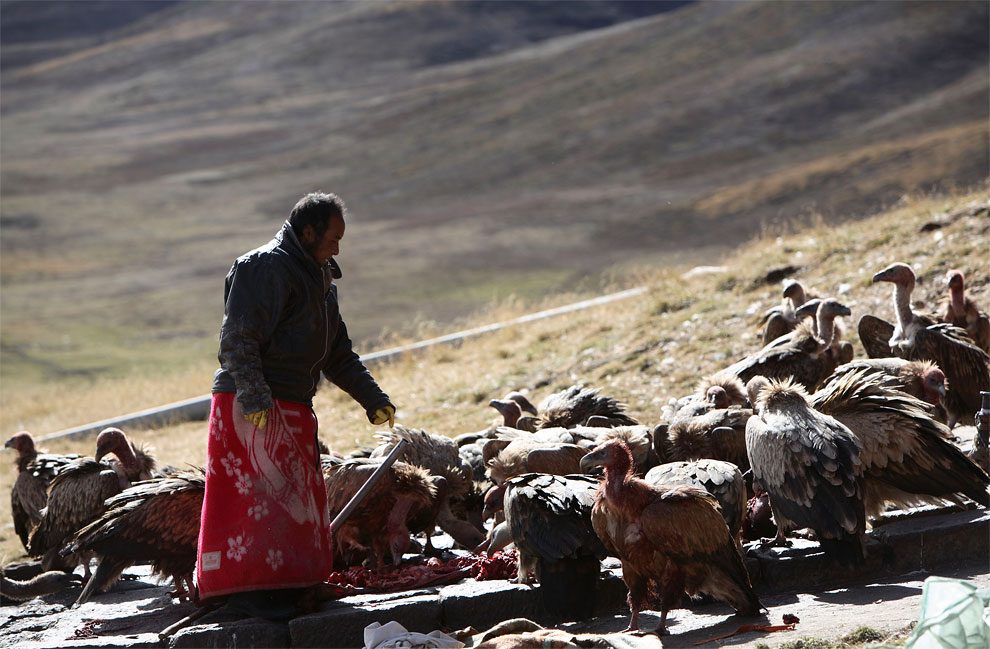
China Photos/Getty Images
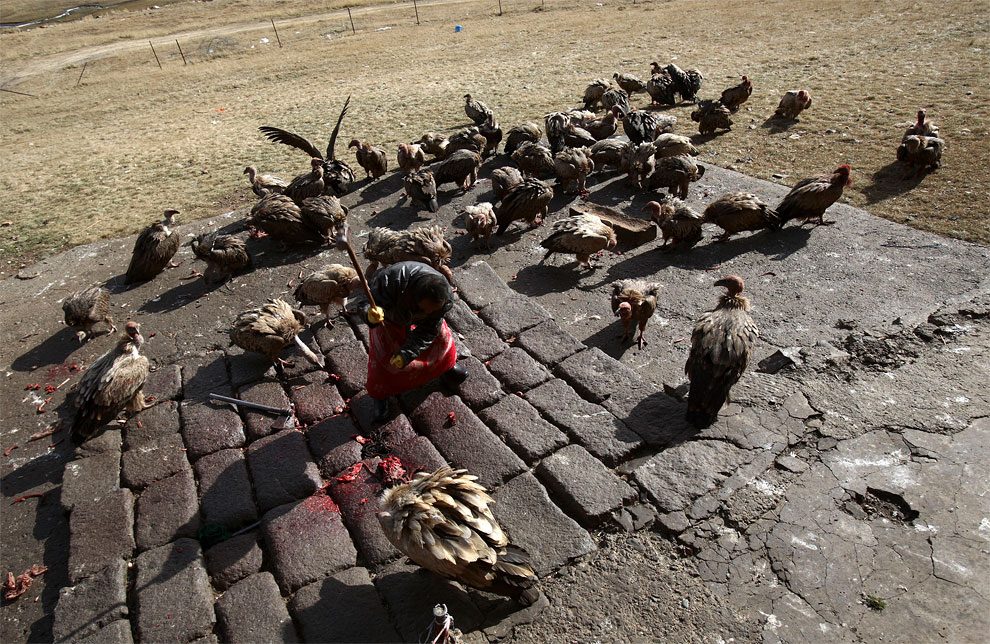
China Photos/Getty Images
A burial master chops bones of a body to feed vultures during a celestial burial ceremony:
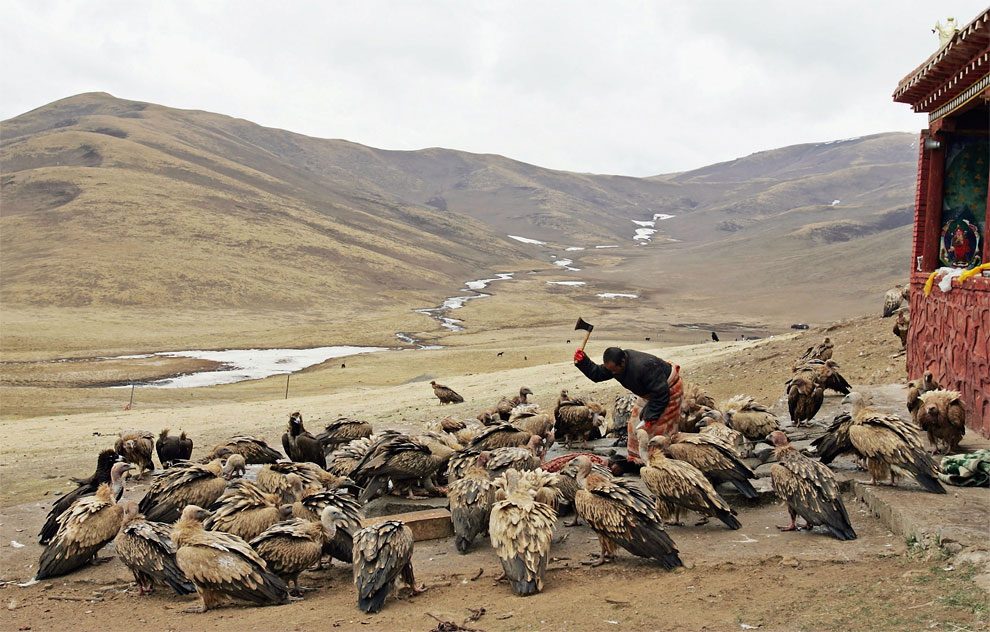
China Photos/Getty Images
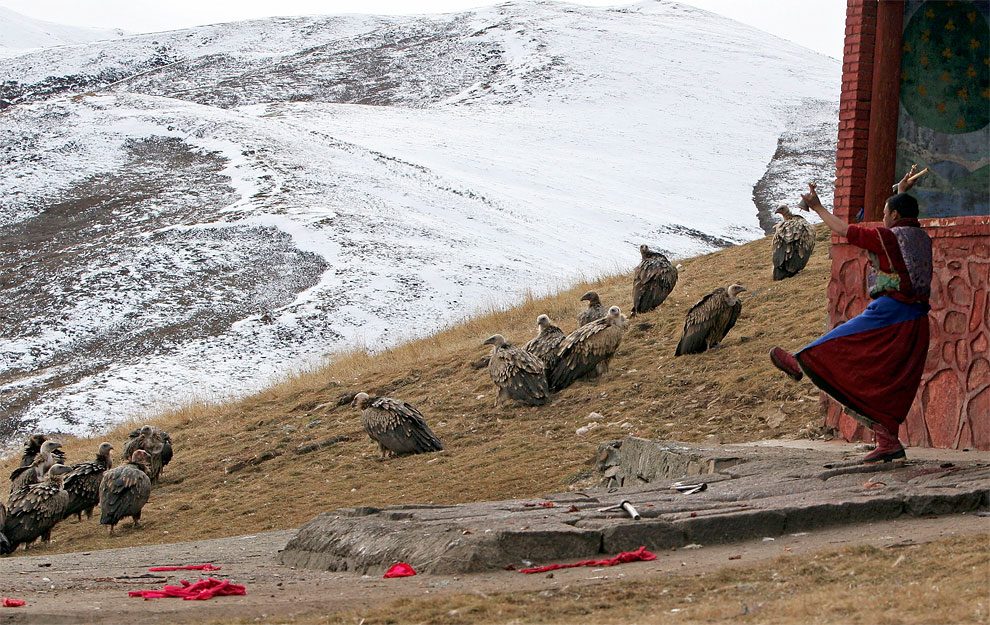
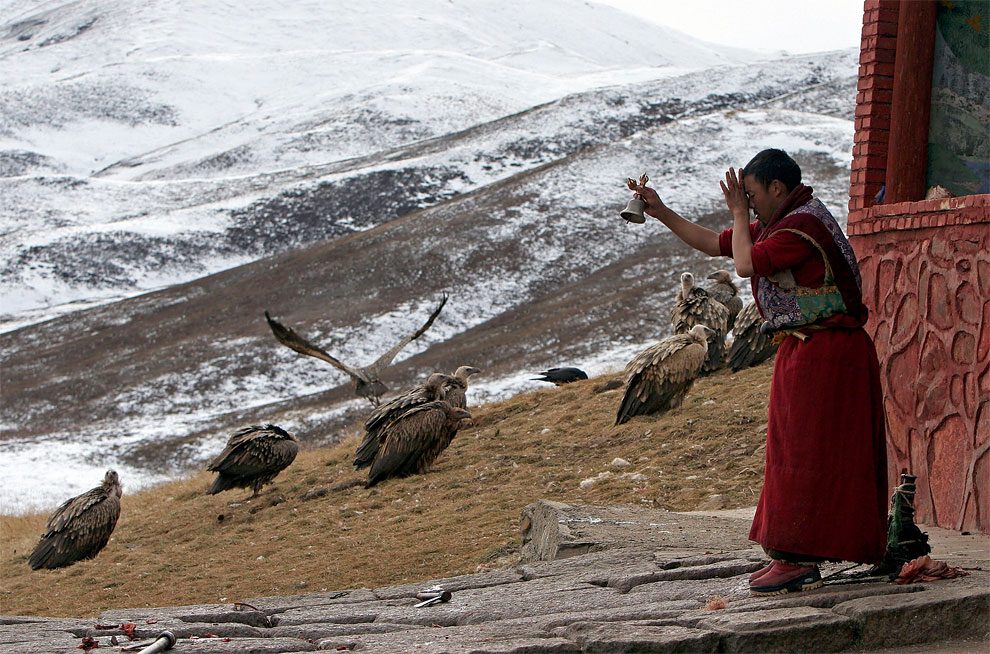
A lama burial master prays and drives away vultures after they finished eating the body of a dead person during a celestial burial ceremony:
China Photos/Getty Images
China Photos/Getty Images
China Photos/Getty Images
China Photos/Getty Images
China Photos/Getty Images
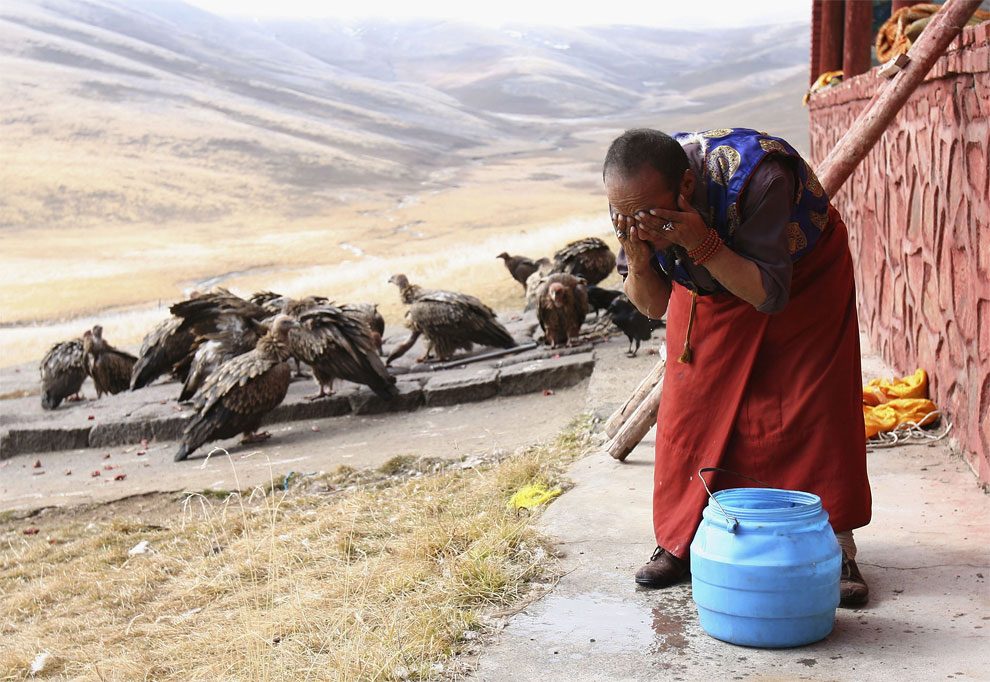
A burial master washes his face after he finished performing a celestial burial ceremony:
China Photos/Getty Images
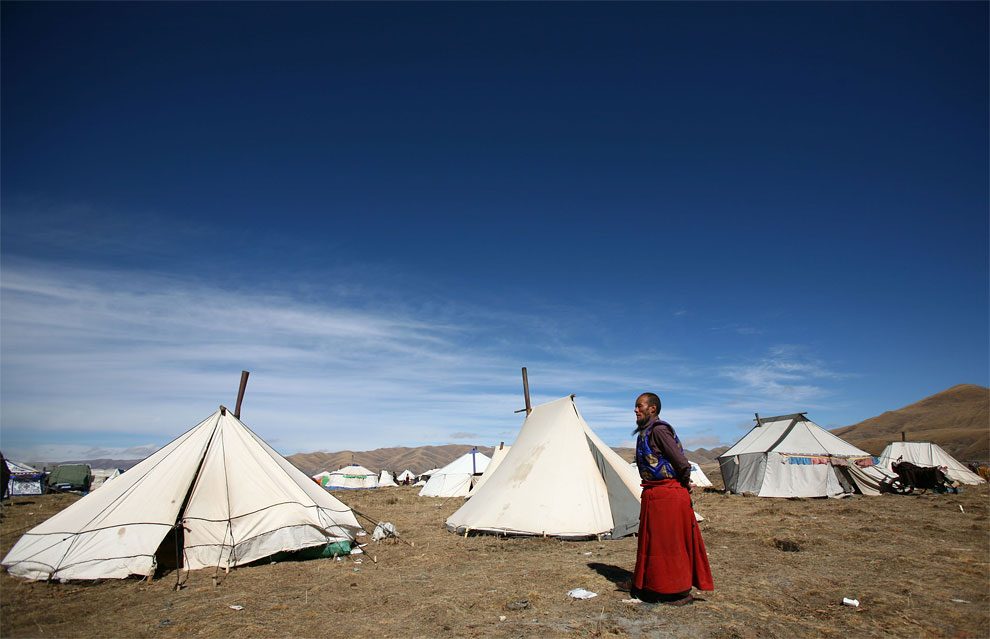
A burial master walks out of his tent after he finished performing a celestial burial ceremony:
China Photos/Getty Images
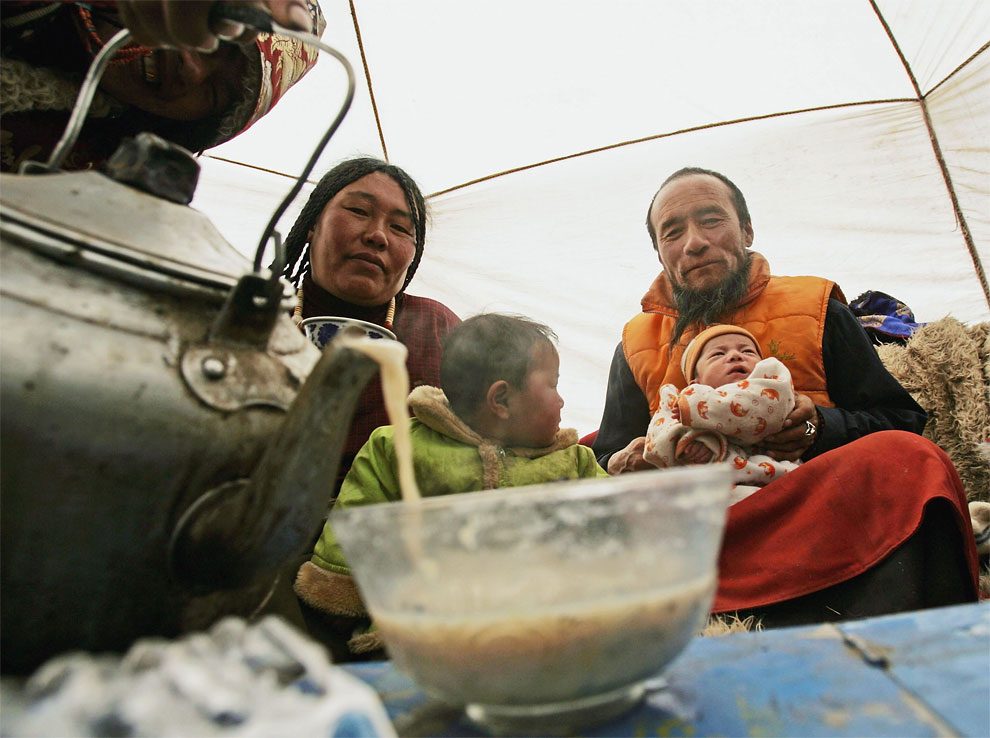
A burial master (R) has butter tea with his family at home after he finished performing a celestial burial ceremony:
China Photos/Getty Images