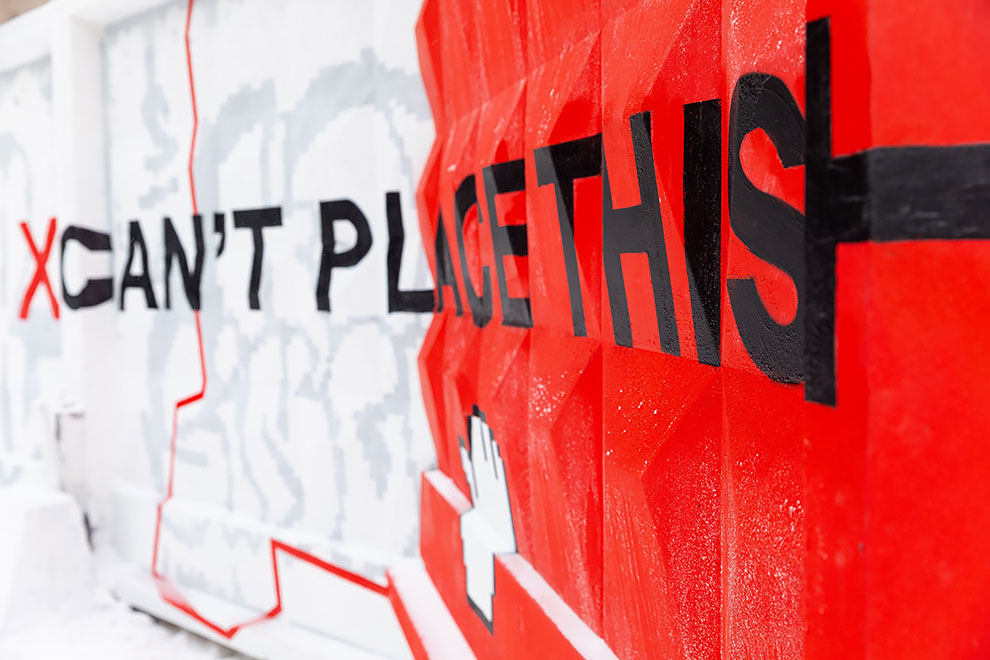
“Can’t Place This Here”: A Concrete Fence Stuck in Textures
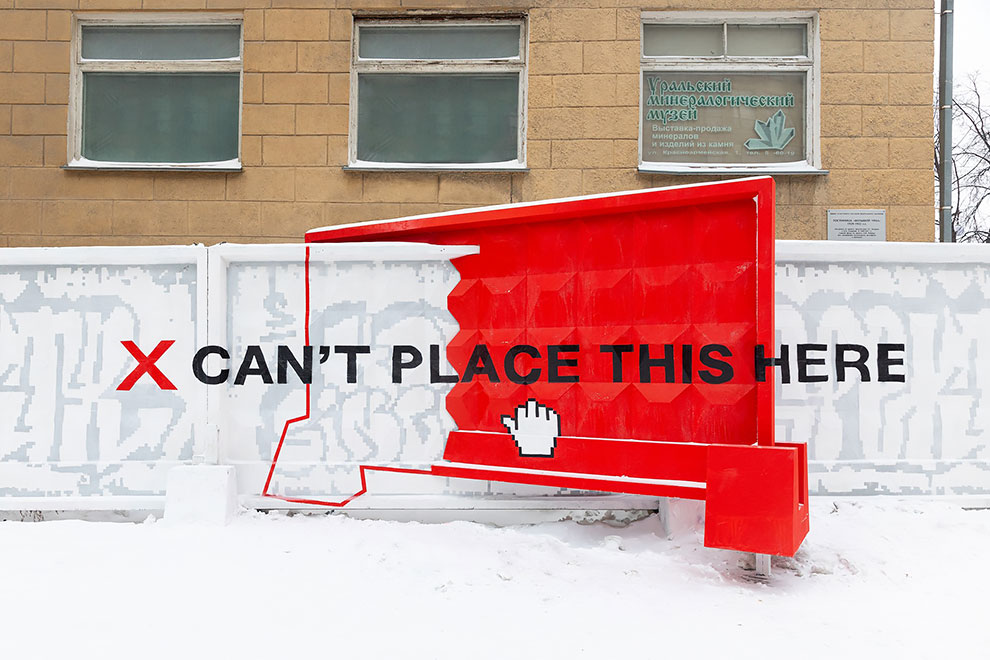
“Can’t Place This Here” is a collaboration between two Russian street art teams: Hot Singles and SPEKTR. This piece was created at CHÖ Public Art Festival in Yekaterinburg, Russia.
The artwork is an architectural intervention: an iconic Soviet concrete fence panel (known as PO-2) is stuck in textures of a real concrete barrier, and stands as a metaphor for the city’s excessive fencing. We think that a fence is a symbol of division. A line between “us” and “them”, between “inside” and “outside”. This is why we think it’s strange to see so many barriers dividing our public spaces”. According to the Kommersant newspaper, more than 2.5 million kilometers of barriers had been erected across Russia in the past 25 years.
More: Hot Singles, SPEKTR
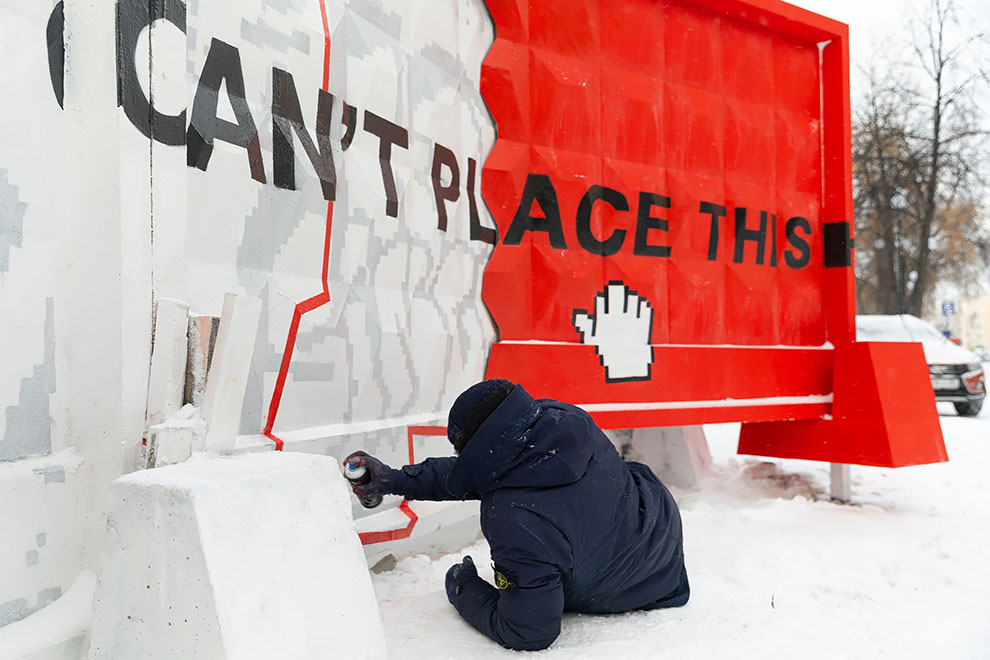
The video game-like syntax of the piece leaves passers-by feeling as if they are inside a city-building simulator. My colleague Andrey Kolokolov explains the idea behind the project: “There’s a feature you get in some games, like strategies and city-builders (Stronghold, Warcraft, SimCity, etc.) called ‘structural overlap.’ It happens when you’re in building mode, and try to place one structure on top of another. When this happens, the structure you want to place lights up red, and the game tells you: ‘Can’t place this here’. Our ‘fence in a fence’ is a statement: there are enough barriers in the city already, and no need for more. Now more than ever, we need to be united, not divided. We should be building bridges, not barriers”.
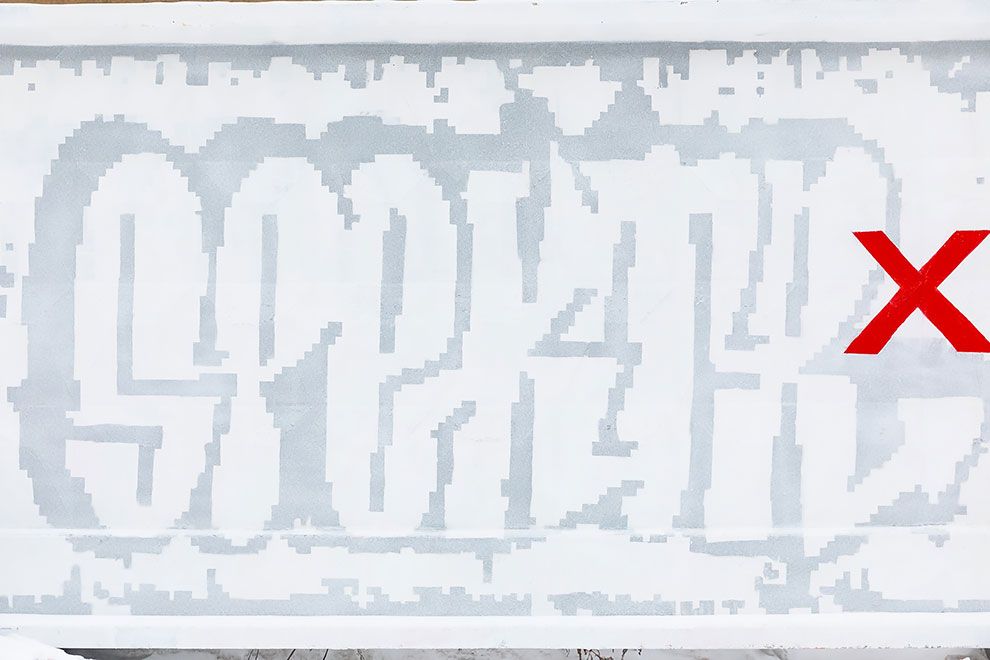
The piece is based on a distinct visual concept. Though the idea itself may be simple, making fences intersect is a tricky business: the panels need to look like they’ve come together accidentally but be aesthetically pleasing at the same time. The SPEKTR and Hot Singles artists meticulously modeled and calculated how the two 3D objects needed to intersect to make the illusion that viewers are in a video game totally convincing. Repeating pixelated graffiti on the panels also contribute to this effect, making the texture tiled.