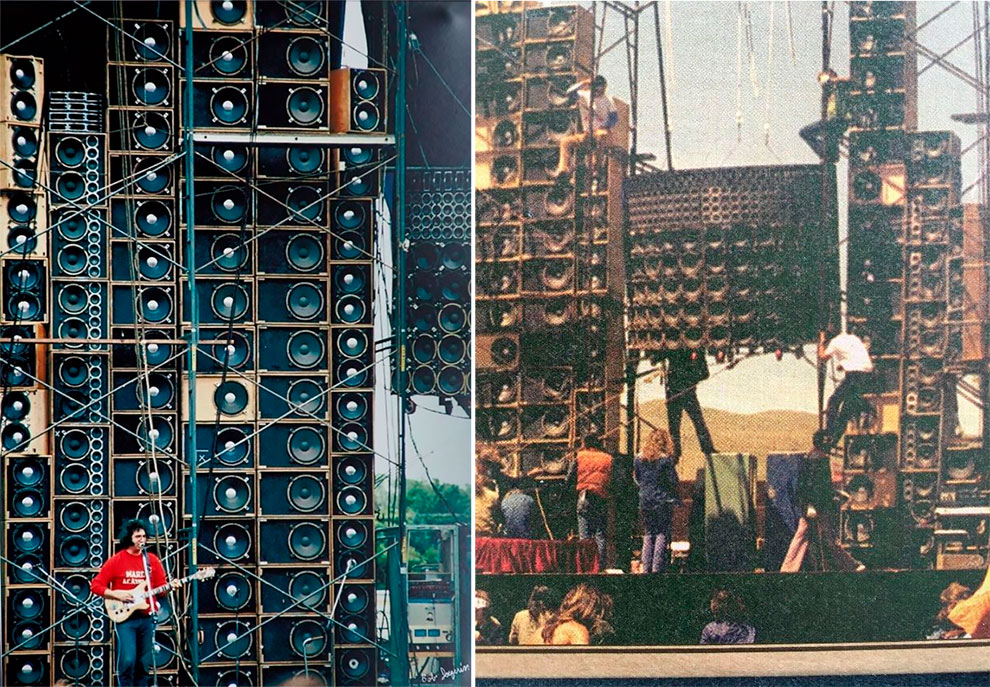
Amazing Vintage Photos Of The Grateful Dead’s Wall Of Sound, 1974
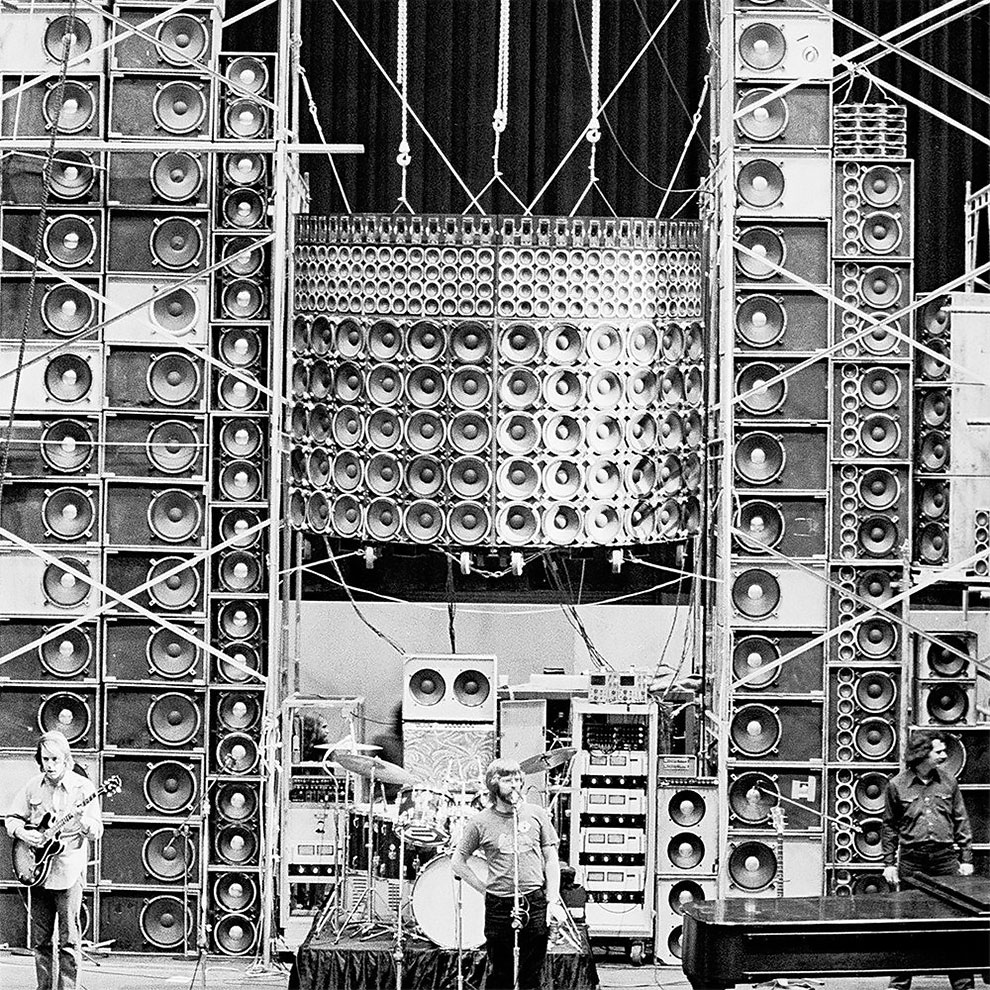
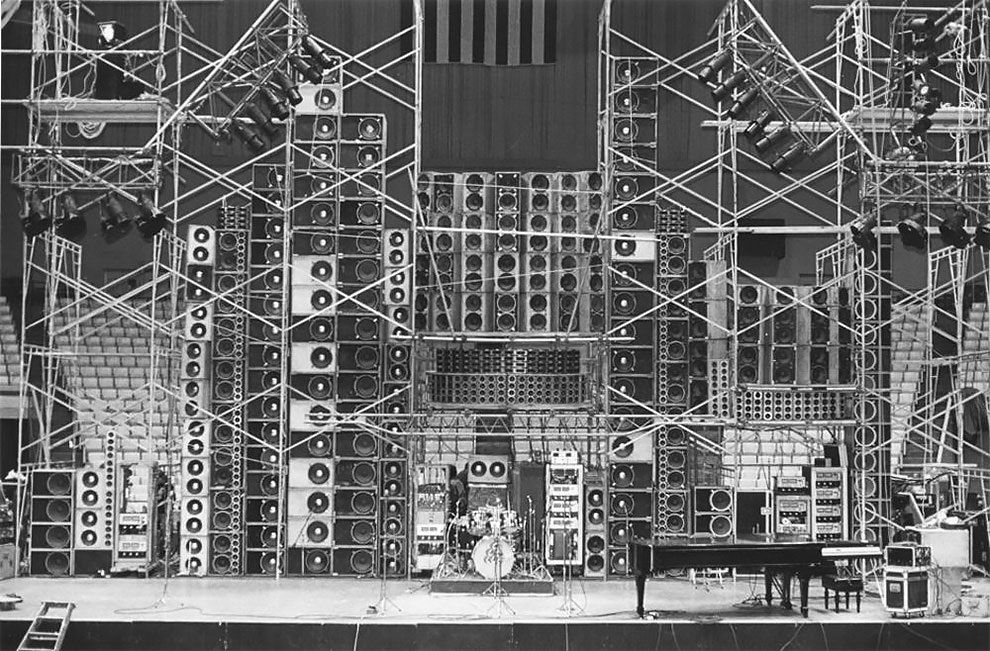
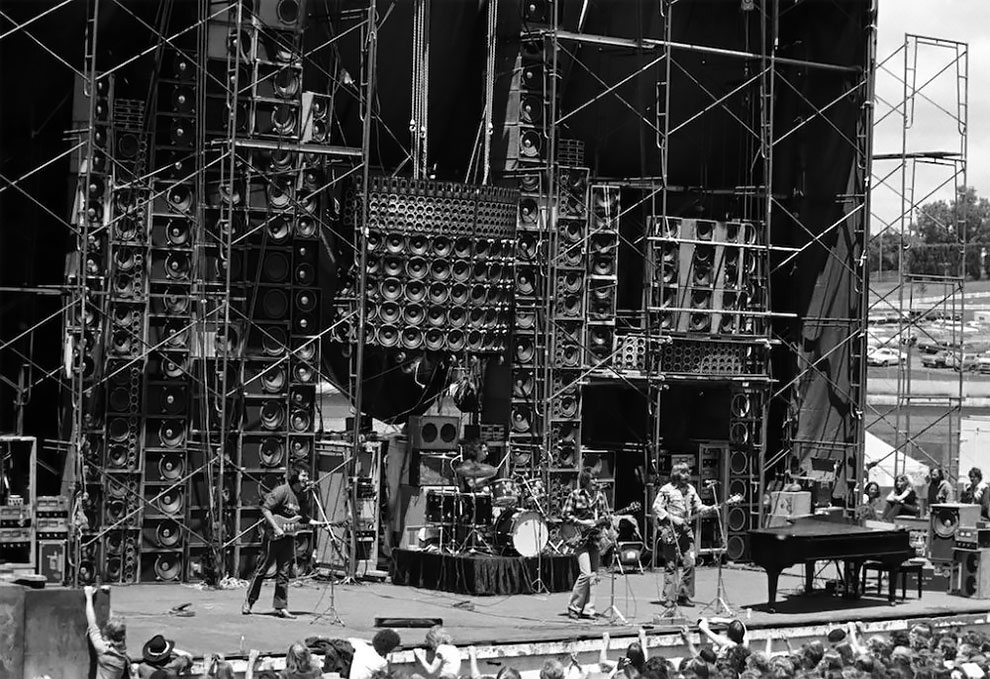
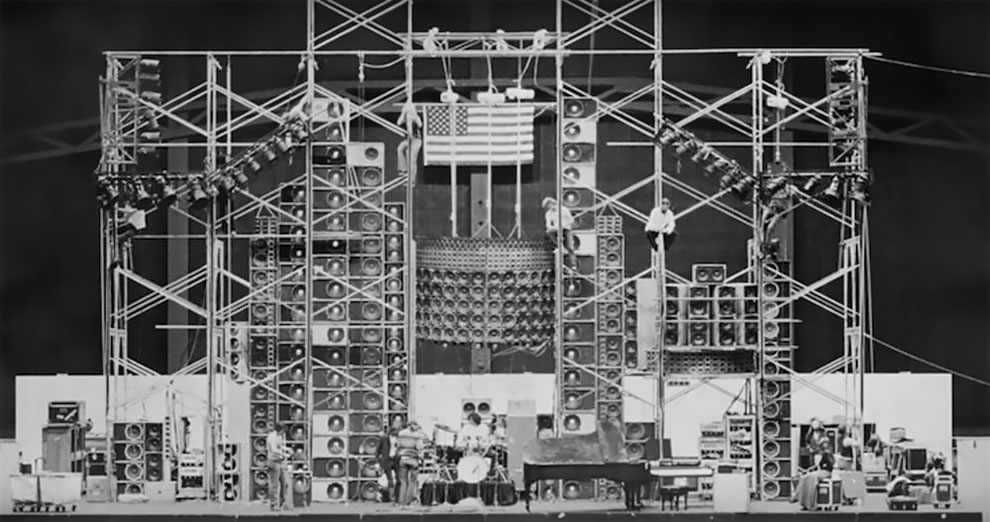
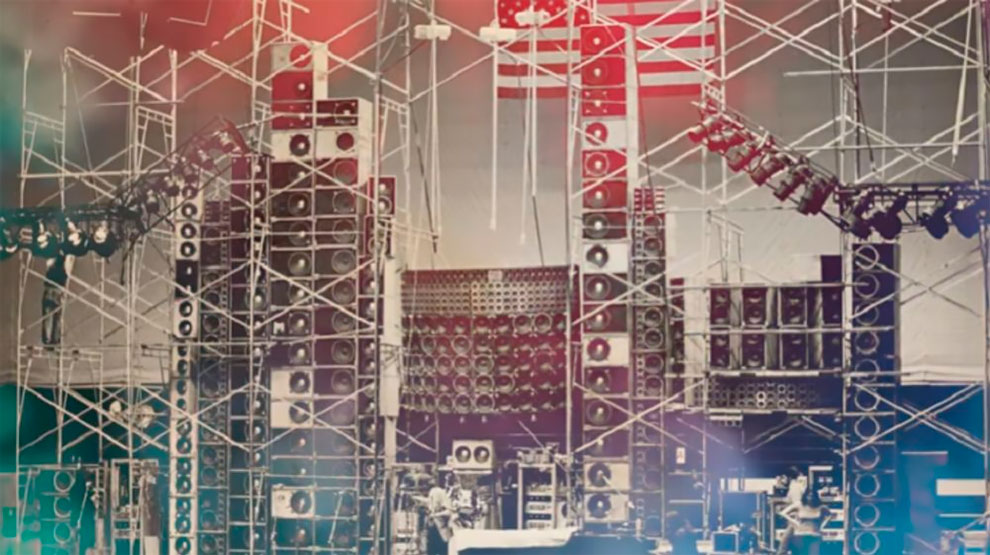
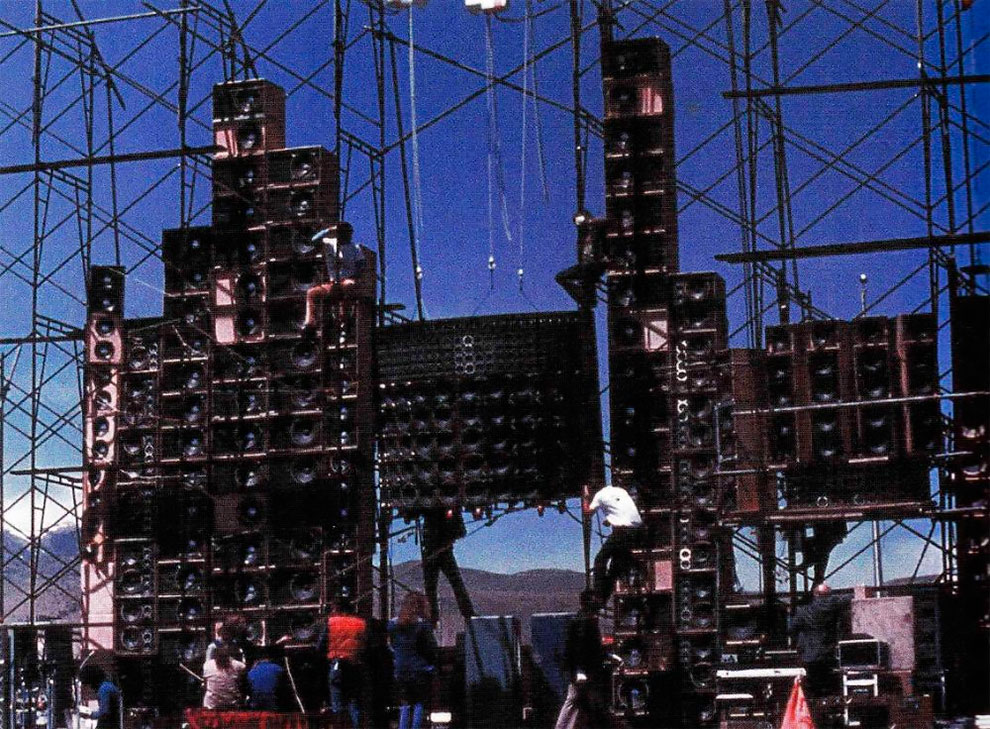
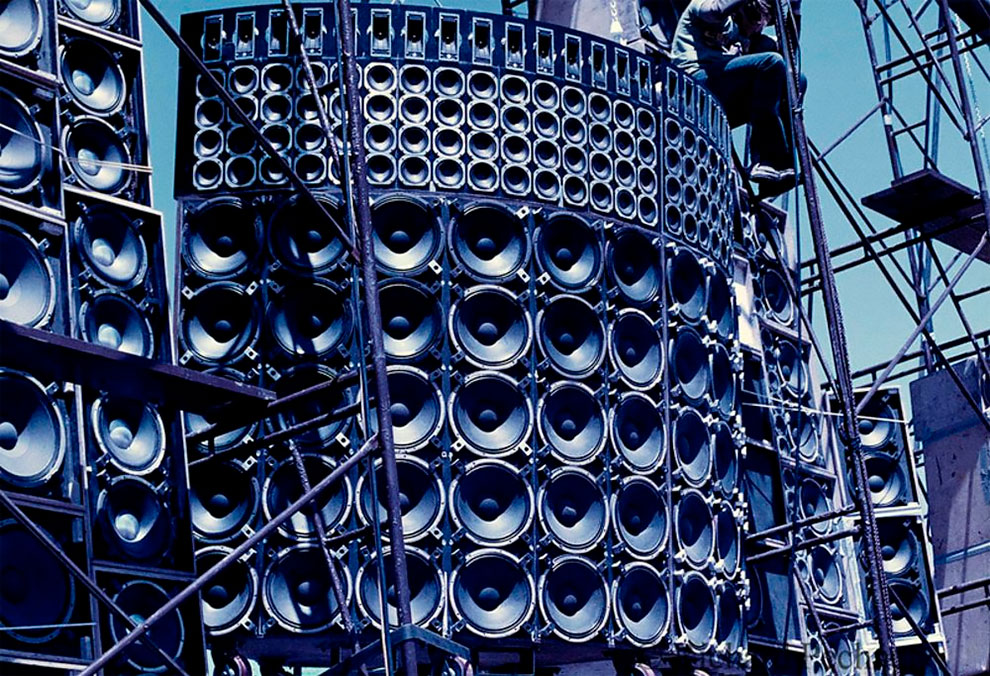
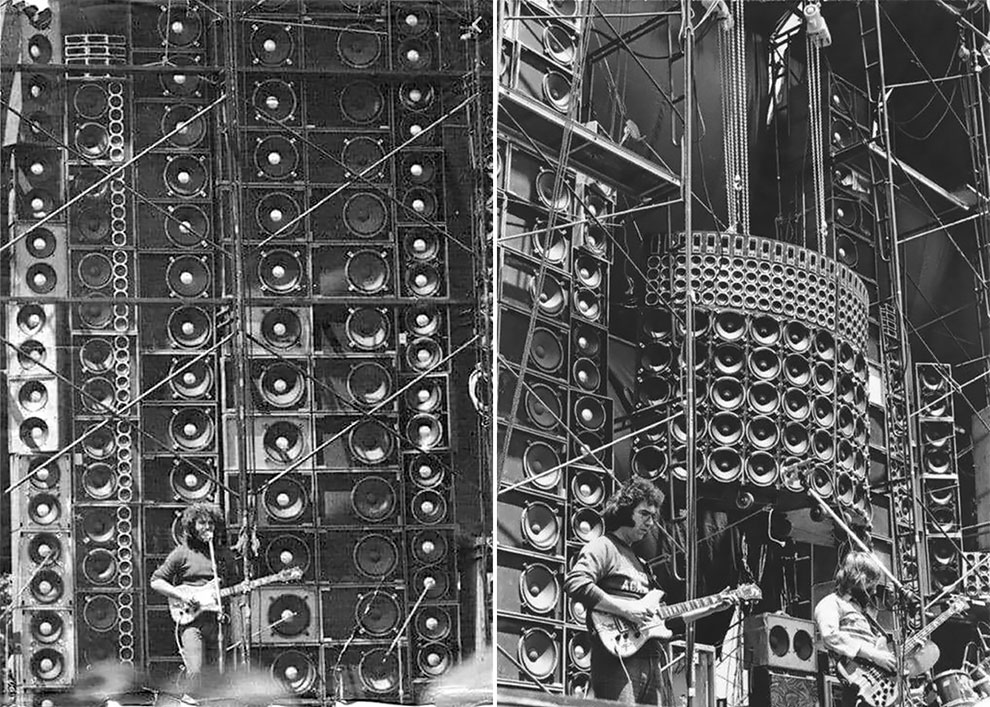
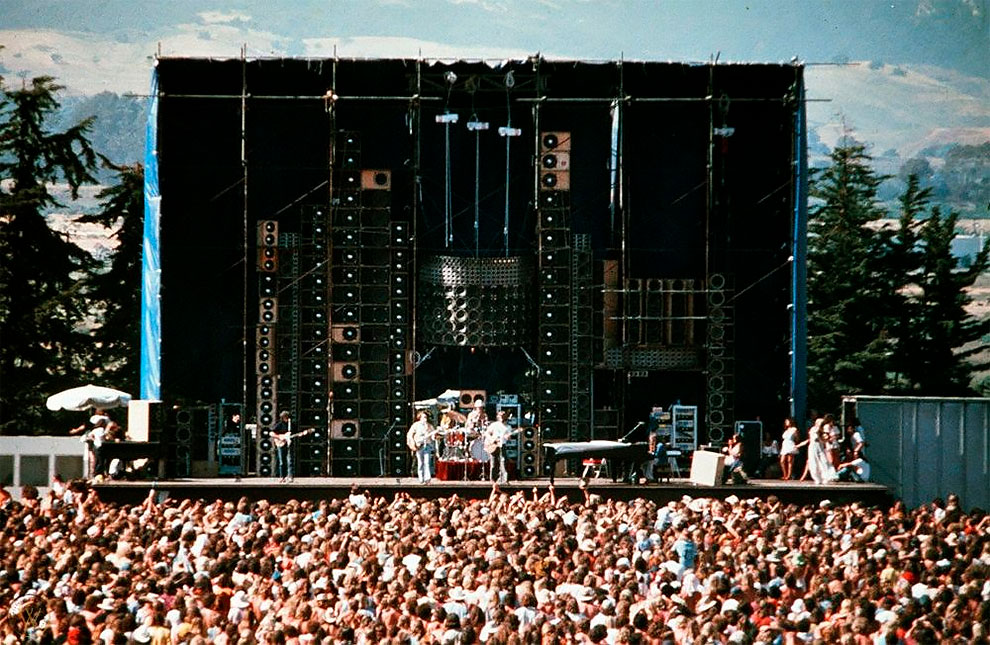
Weighed over 70 tons, comprise dozens and then hundreds of amps, speakers, subwoofers, and tweeters, stand over three-stories tall and stretch nearly 100 feet wide. Its name could only be the “Wall of Sound”.
h/t: vintag.es
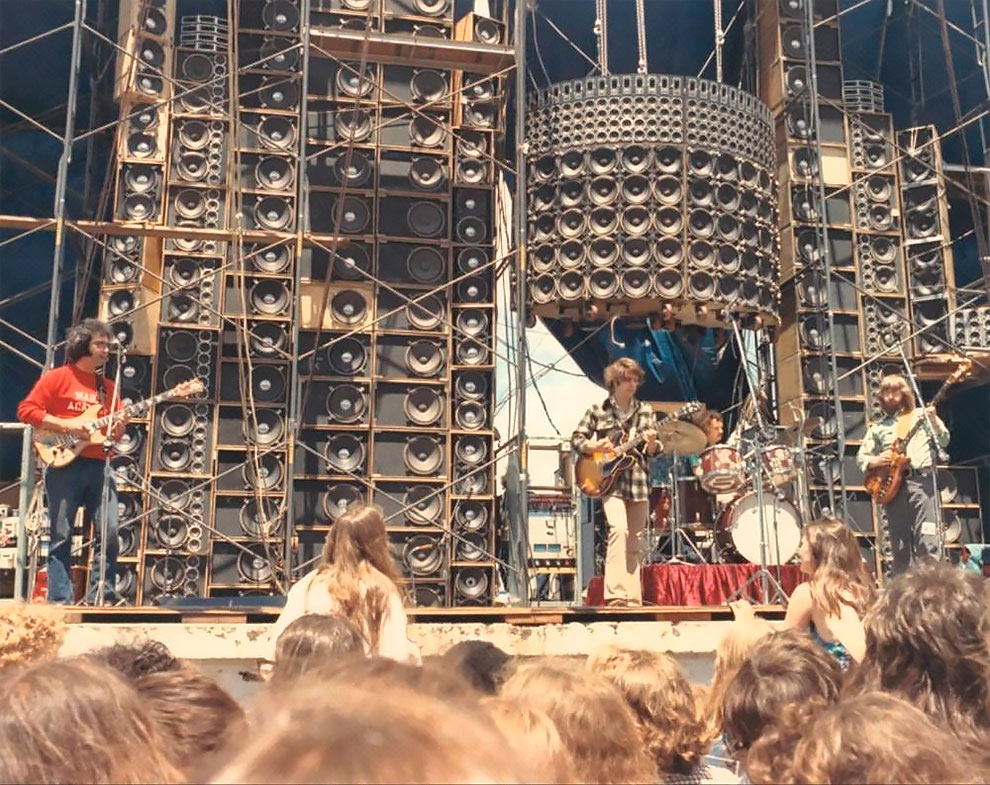
The Wall of Sound was an enormous public address system designed specifically for the Grateful Dead’s live performances in 1974. It was the creation of audio engineer Owsley “Bear” Stanley. The Grateful Dead gave the sneak peek of the Wall of Sound on February 9, 1973 at Stanford University’s Maples Pavilion but it was on March 23, 1974 when they debuted the completed system during their tour stop at the Cow Palace in Daly City, California.
After got out of prison in late 1972, Stanley, Dan Healy and Mark Raizene of the Grateful Dead’s sound crew, in collaboration with Ron Wickersham, Rick Turner, and John Curl of Alembic, combined six independent sound systems using eleven separate channels, in an effort to deliver high-quality sound to audiences. Vocals, lead guitar, rhythm guitar, and piano each had their own channel and set of speakers.
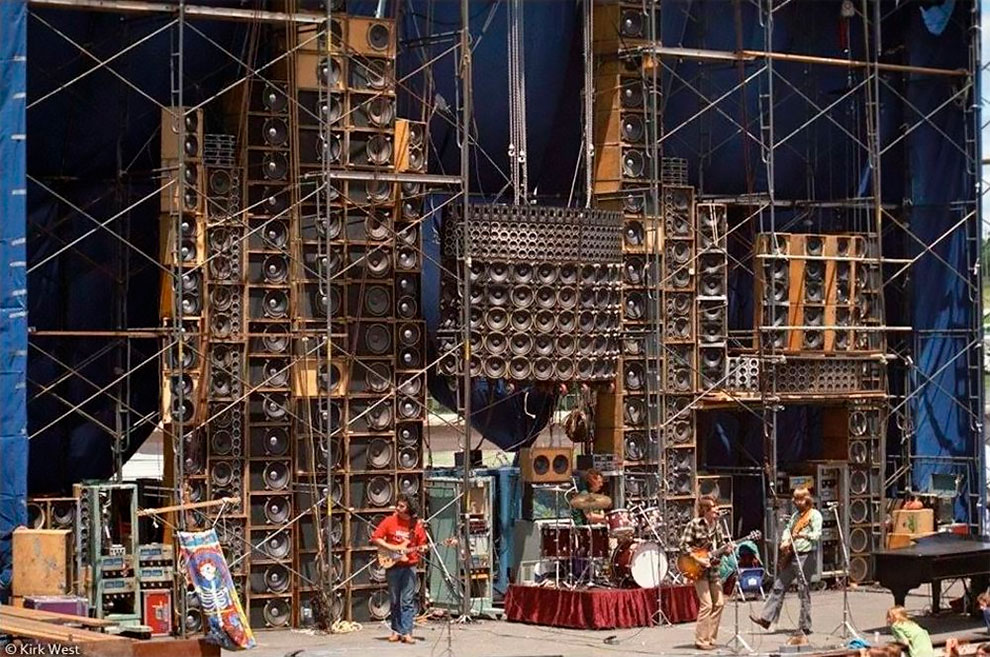
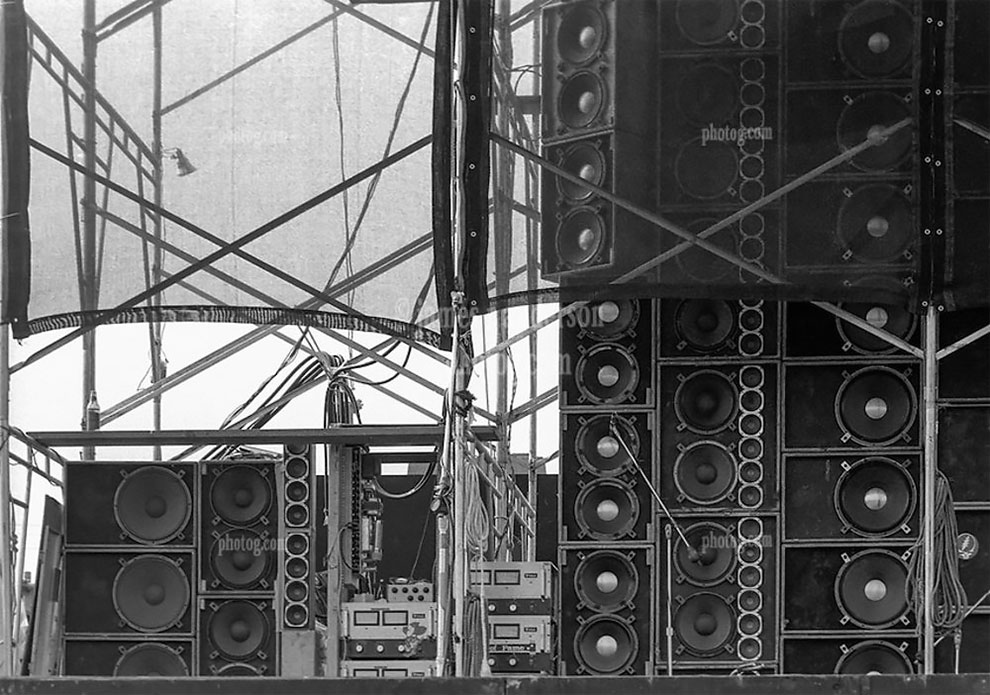
Phil Lesh’s bass was piped through a quadraphonic encoder that sent signals from each of the four strings to a separate channel and set of speakers for each string. Another channel amplified the bass drum, and two more channels carried the snares, tom-toms, and cymbals. Because each speaker carried just one instrument or vocalist, the sound was exceptionally clear and free of intermodulation distortion.
Bassist Phil Lesh told Rolling Stone magazine, “I started talking to Bear about our sound problems. There was no technology for electric instruments. We started talking about how to get around distortion and get a pure musical tone. He did some research and said, ‘Let’s use Altec speakers and hi-fi amps and four-tube amps, one for each instrument, and put them on a piece of wood.’ Three months later we were playing through Bear’s sound system.”
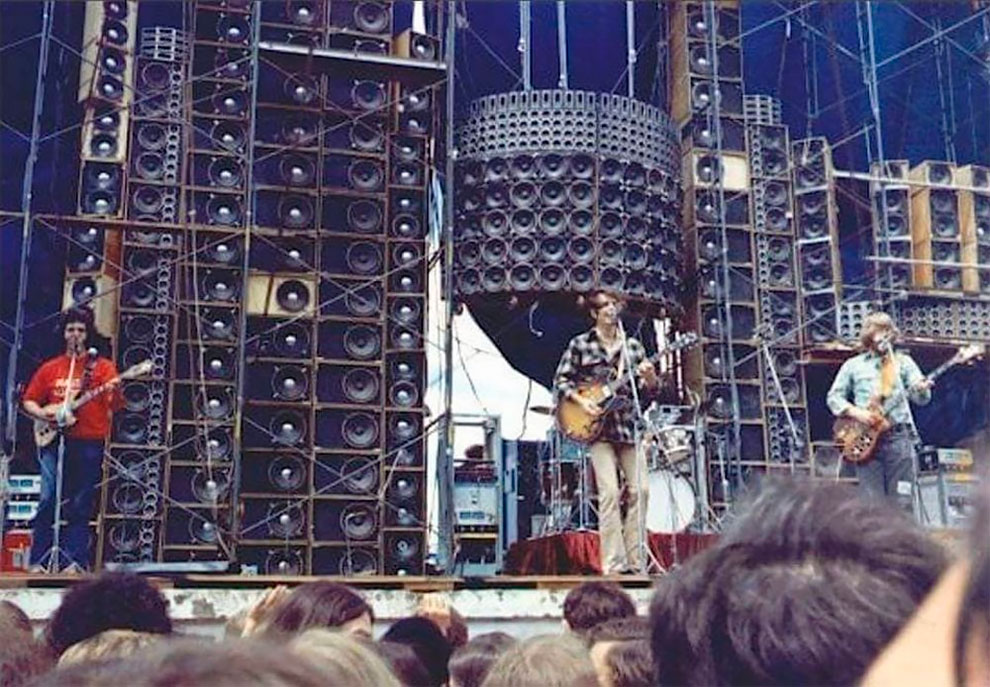
vThis system projected high-quality playback at six hundred feet with an acceptable sound projected for a quarter mile, at which point wind interference degraded it. The Wall of Sound was the first large-scale line array used in modern sound reinforcement systems, although it was not called a line array at the time. The Wall of Sound was perhaps the second-largest non-permanent sound system ever built.
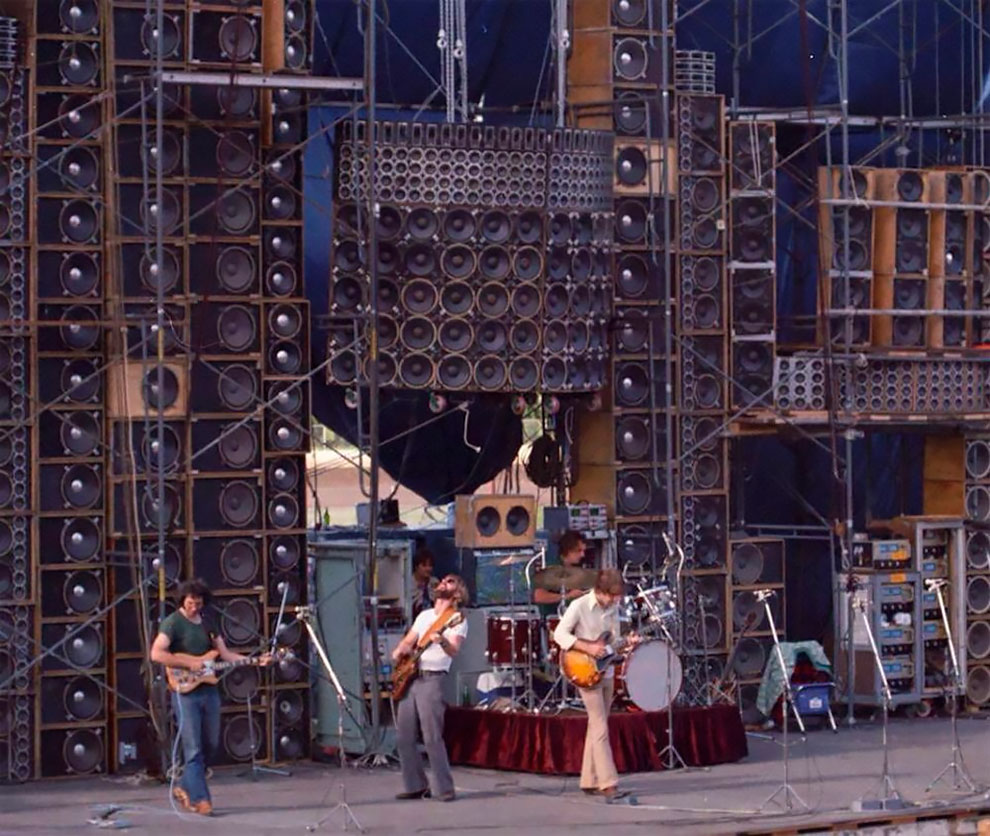
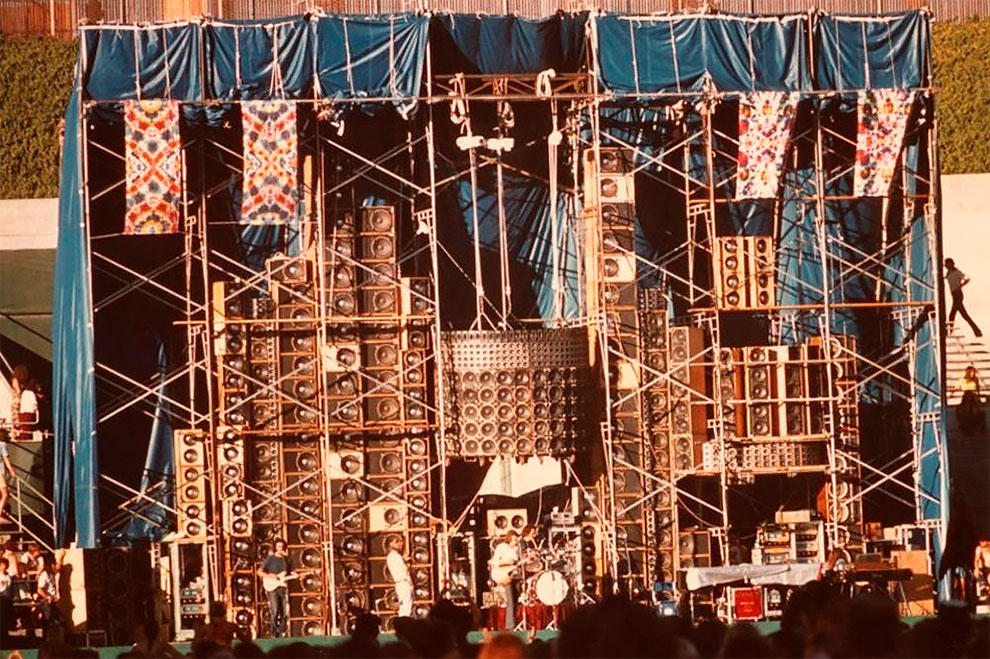
There were multiple sets of staging and scaffolding that toured with the Grateful Dead. In order to accommodate the time needed to set up and tear down the system, the band would perform with one set while another would “leapfrog” to the next show. According to band historian Dennis McNally, there were two sets of scaffolding. According to Stanley, there were three sets. Four semi-trailers and 21 crew members were required to haul and set up the 75-ton Wall.
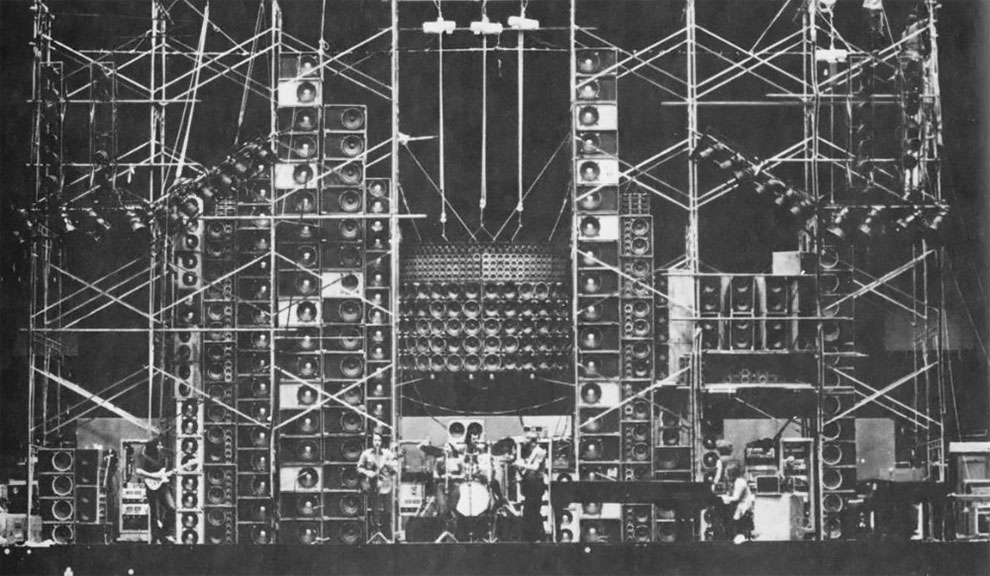
As Stanley described it, “The Wall of Sound is the name some people gave to a super powerful, extremely accurate PA system that I designed and supervised the building of in 1973 for the Grateful Dead. It was a massive wall of speaker arrays set behind the musicians, which they themselves controlled without a front of house mixer. It did not need any delay towers to reach a distance of half a mile from the stage without degradation.”