Inside the National Museum of Funeral History’s Most Unusual Casket
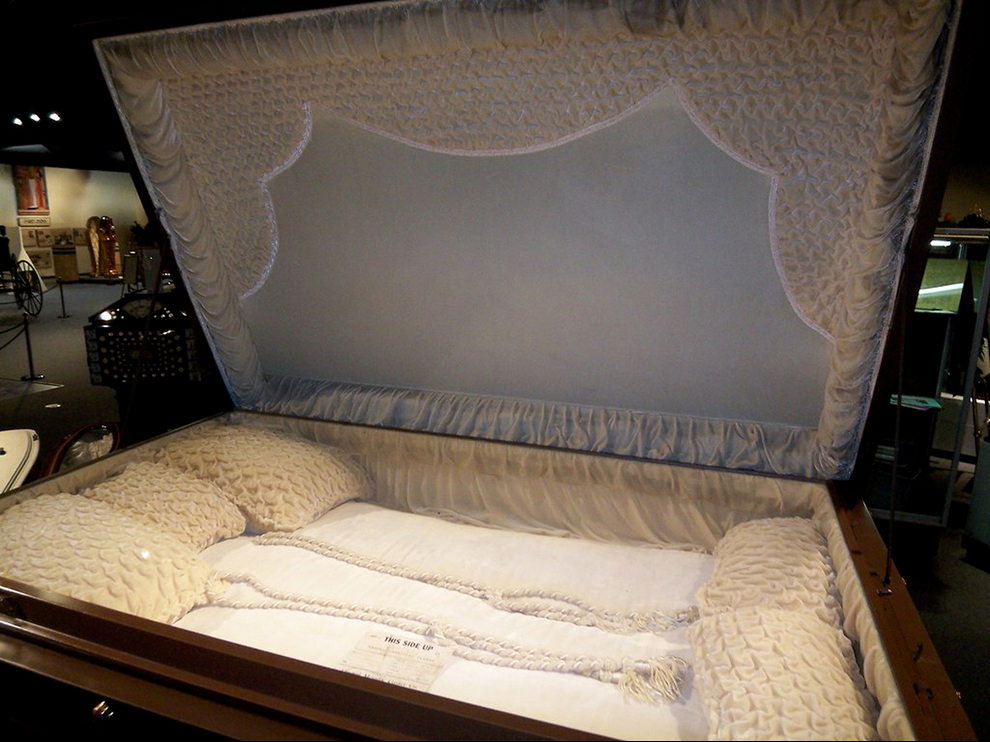
At the National Museum of Funeral History, one exhibit carries a story far more human than its unsettling appearance first suggests: a large wooden casket built for three people.
h/t: vintag.es
It was commissioned in the mid-1930s by a young couple after the death of their infant daughter. Devastated by the loss, they believed they could not imagine a life without her. In the darkest period of their grief, they made plans to die together and asked a local funeral home to create a custom coffin wide enough for both parents, with a space between them for their child.
The casket was unlike anything the funeral home had made before. Its unusual size and interior arrangement required months of work. But during that time, something changed.
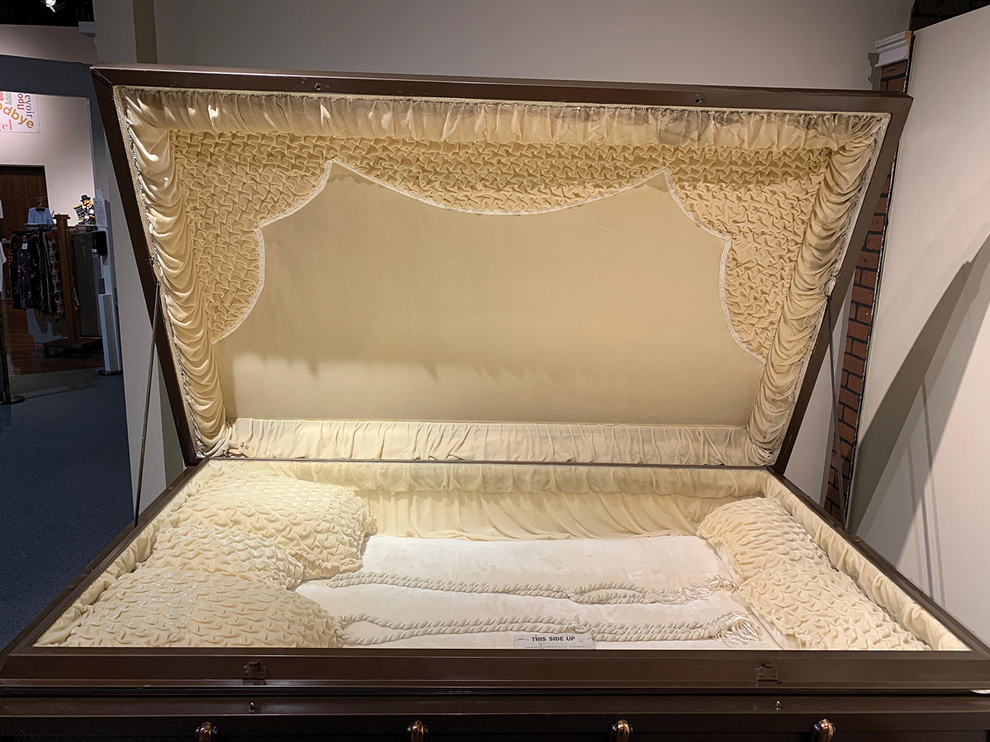
The first shock of bereavement slowly gave way to the passage of ordinary days. The couple abandoned their plan, moved west toward California, and left the finished casket behind in the funeral home’s storage.
Years later, in the 1950s, the woman wrote back. Her husband had died of natural causes, and she asked whether she could receive a refund for the coffin they had paid for decades earlier. By then, the funeral home had changed hands twice, and its new director could find no records that would allow him to reimburse her. He asked her to arrange for the casket to be collected.
She never replied.
The casket remained in storage for years before eventually being donated to the National Museum of Funeral History. Today, it is believed to be the only known three-person casket of its kind.
It is easy to see it as a morbid curiosity. But its real meaning lies elsewhere. It is a reminder that grief can make the future seem impossible — and that even when nothing appears capable of changing, time sometimes does.